
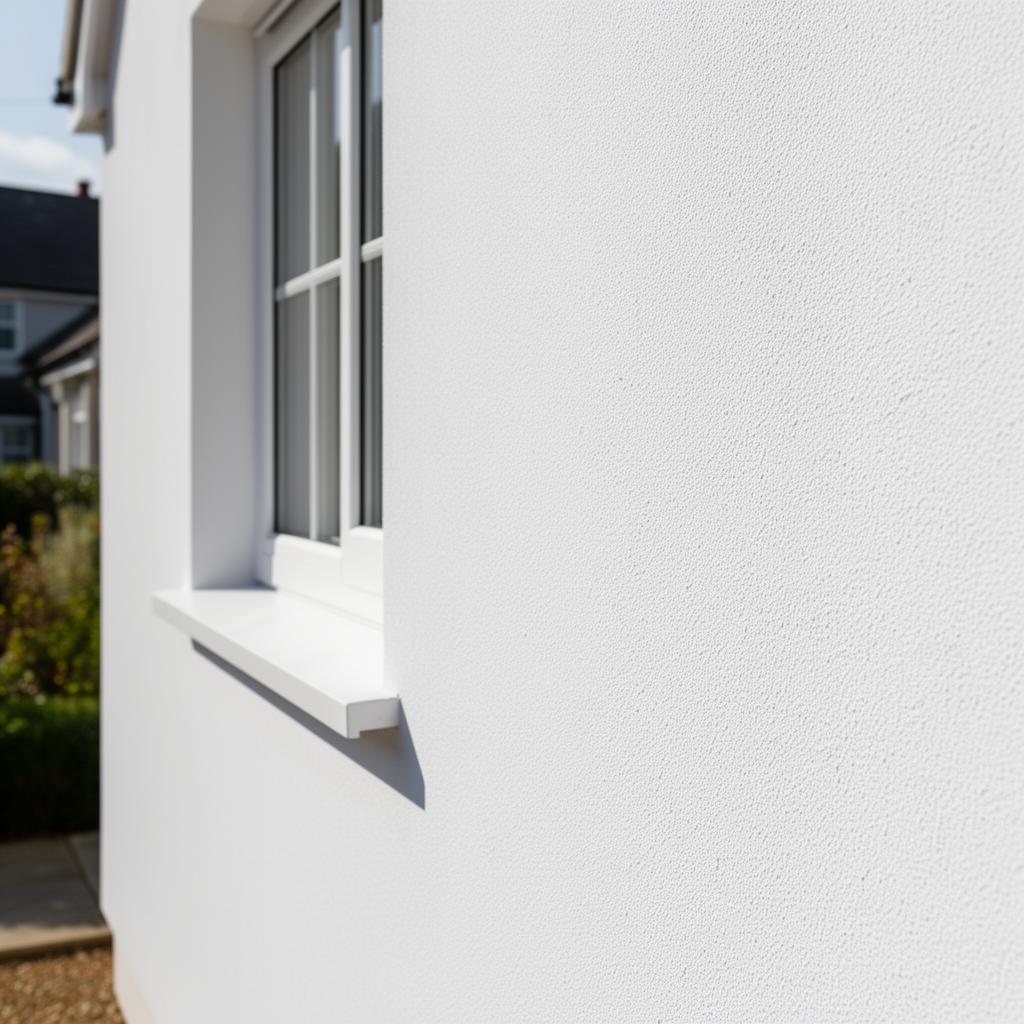
Smooth-render four-bed detached
Whole-house softwash, two days from quote to clean, payment after photos approved.
Devon · PL6
If the wall cleaning & softwash at your Southway property has started looking tired, you're not alone. Estate homes share elevations with neighbours, so an uneven clean stands out from the moment you turn into the close. Plymouth City Council covers Southway, and building stock here is dominated by 1960s–70s semis and post-war estates.
If the wall cleaning & softwash at your Southway property has started looking tired, you're not alone. Estate homes share elevations with neighbours, so an uneven clean stands out from the moment you turn into the close. Plymouth City Council covers Southway, and building stock here is dominated by 1960s–70s semis and post-war estates.
Large post-war estate on the northern edge of Plymouth, which shapes how wall cleaning & softwash on render and pebbledash and concrete tile actually plays out around PL6. If you can see Whitleigh from the end of your road, we cover you.
Payment is only ever after you've seen the photos and signed off, never up front. We work the softer end of the pressure range by default, and only step up when a surface genuinely wants it. There's no minimum charge to look at a job — we'll walk around it, quote it and leave the ball with you. Kiln-dried sand goes back into block-paving joints on the same visit once the surface is dry enough. The most common repeat booking pattern we see is roof every three years, gutters every year, walls every two. Landlords with multiple properties get a single monthly invoice covering every visit, not one per address. Biocide runs get re-tested for concentration at the top of every day, not the top of every week. Downpipe inlets are water-tested before we leave, not just visually checked. First-visit customers get a written surface report at no cost, whether they book more work or not. The van livery is deliberately low-key because half the neighbours have booked us the following month. We keep a spare crown for the surface cleaner in the van because the swivel wears faster than anything else. Winter drive seals are cured under a tarp and a heater for the last two hours so overnight rain doesn't spoil the finish. Conservatory glass roofs get a two-pass rinse because the profile holds pooled water otherwise. If a re-clean is needed we book it in rather than debating who was right about the surface. Enquiry-to-quote turnaround is measured weekly and posted on the wall in the yard.
Large post-war estate on the northern edge of Plymouth.
Most Southway properties we treat have render and pebbledash walls and a concrete tile roof. That changes a few of the choices we'd make.
Sodium hypochlorite mixed to a strength suitable for render and pebbledash - never neat on modern estate stock - noted at exposed exposure - the difference between a two-year finish and a five-year one.
Low-volume rinse from a high-flow tank - critical on the softer finishes you see across 1960s–70s semis and post-war estates - noted in the Plymouth City Council patch - handled with the same rig we use for coastal properties.
Painted brickwork treated by dwell-and-rinse only on modern estate terraces - no rotary - noted 3.4 miles from PL3 - the sort of visit that ends with a photo pack, not just an invoice.
Lime render handled with a half-strength mix and a longer dwell — important on older Southway stock - noted at roughly 50.421,-4.130 - and it's exactly the sort of job the fleet was set up for.
Smooth-render four-bed detached
Whole-house softwash, two days from quote to clean, payment after photos approved.
K-Rend front + gable
Algae-darkened K-Rend brought back to its original off-white in a single visit, no streaking on the silicone finish.
Lime-rendered townhouse
Locally listed property, low-strength biocide and very gentle rinse — finish kept its character.
Our 20-mile coverage from PL3 - Southway is highlighted, with the closest neighbouring areas we cover.
Method matters more than price. The wrong method on {walls} or {roofs} costs more to fix than the original wall cleaning & softwash would have done. In Southway specifically: render and pebbledash walls, concrete tile roofs, 1960s–70s semis and post-war estates stock, Plymouth City Council.
Wall Cleaning & Softwash in Whitleigh
PL5 - approx 0 miles from Southway
Wall Cleaning & Softwash in Crownhill
PL6 - approx 0 miles from Southway
Wall Cleaning & Softwash in Tamerton Foliot
PL5 - approx 1 miles from Southway
Window Cleaning in Southway
Streak-free windows, frames and sills with pure-water poles up to four storeys.
Skip the doorstep visit — most wall cleaning & softwash jobs in PL6 are quoted from photos and a brief WhatsApp chat. Survey only if anything's unusual. Working Southway Drive through Southway (PL6), roughly 3.4 miles from our PL3 yard. Large post-war estate on the northern edge of Plymouth.