
Render and wall cleaning in Membland
painted stone and render walls, slate roofs, 7.1 miles from the yard.
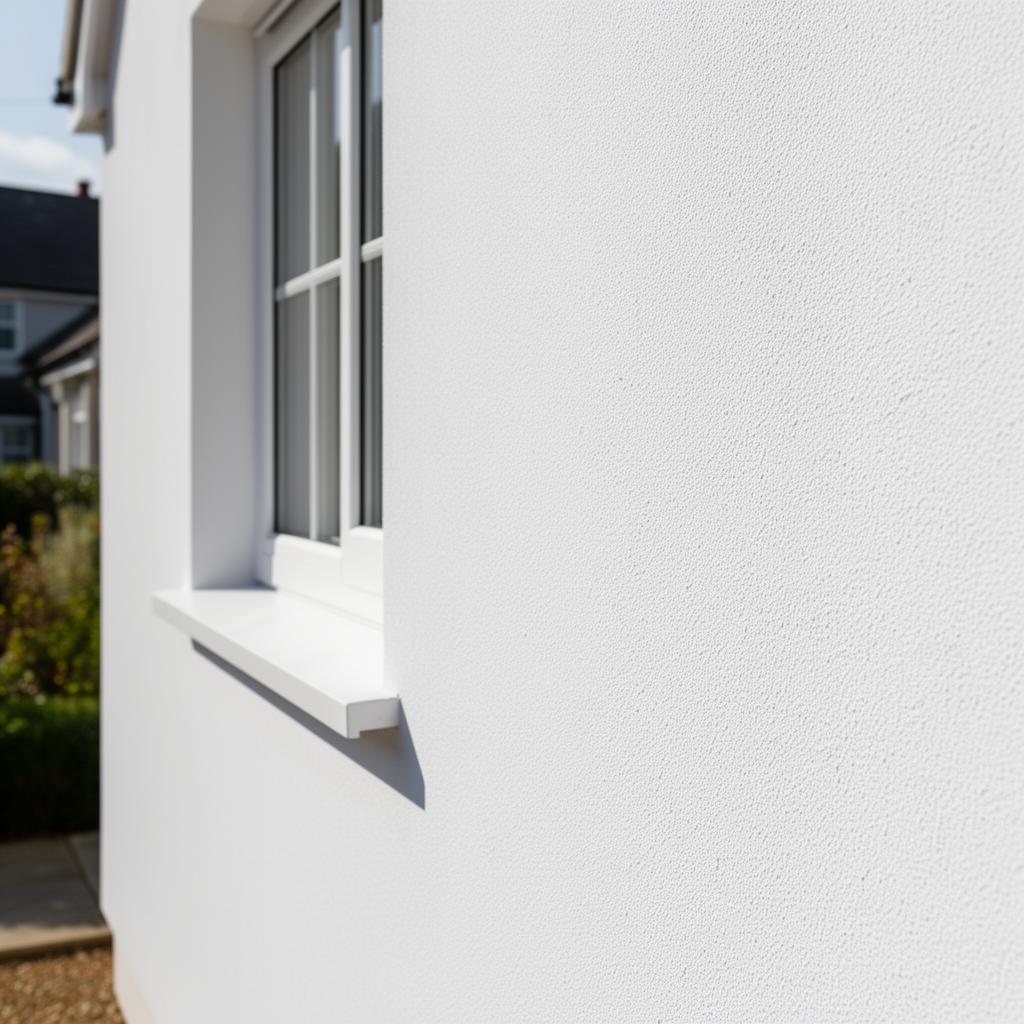
This page is about one job in one place: cleaning painted stone and render walls in Membland, Devon. Softwash means chemistry and dwell time doing the work rather than pressure.
Quote for a Membland property
Monday to Saturday, 8am – 7pm
Why walls green up in Membland
- Any surface that holds a drop of water long enough to be seen will hold it long enough to feed growth.
- The first sign is usually a faint grey cast rather than green, and grey is easier to ignore.
- Salt spray does not itself grow, but it roughens and holds damp, which is the same outcome.
- Airflow along a terrace is different from airflow around a detached house, and the drying patterns follow.
- A leaking outside tap or an unlagged pipe can be the entire reason one corner of a house looks different from the rest.
- Roof valleys concentrate run-off, so the wall under a valley outlet is loaded more heavily than anywhere else.
- Render that has lost its water repellency absorbs and holds surface water instead of shedding it.
- Bird activity along a gutter line concentrates nutrients on the wall directly below it.
- Roof debris shed from a mossy slope lands on the same band of wall year after year.
What the staining pattern tells us
- 01The first question is whether the staining sits on the surface or has gone into the material, because only one of those cleans off.
- 02Whether the render is thin-coat or traditional is checked at a bead or a reveal.
- 03The ground level relative to the damp course is checked before the base of a wall is treated.
- 04Colour matters: green suggests algae, black suggests fungal spotting, grey-white crust suggests lichen.
- 05Whether the property is exposed or sheltered is judged on the day, not from a map.
- 06Any staining that continues below ground level is a drainage question, not a cleaning one.
- 07The condition of the cills tells you how much water has been running down the face.
- 08Where the pattern is a band at the bottom, splash from the ground is doing it.
Getting a Membland property ready
- Note where the electricity meter and consumer unit sit relative to the wall.
- Note the position of the stopcock in case the outside tap needs isolating.
- Note any external socket or garden power run near the base of the wall.
- Close and latch every window on the elevations being worked, including any small top lights.
- Tell us about any previous treatment that came back quickly, and how quickly.
- Note where hoses can be run without crossing a doorway.
- Move cars off a drive that runs tight to the house if you can, and tell us if you cannot.
- Point out ground-floor windows that are painted shut, as they need different masking.
What the surface will and will not take
- Render that has lost its water repellency absorbs surface water instead of shedding it, which extends every damp spell.
- Coloured through-render fades gradually, so what looks like dirt on an older wall is sometimes age in the finish.
- Painted plinths take splash and are worked as a separate band from the main face.
- A weaker mix and a longer wait suits paint better than anything stronger and faster.
- Where stone has been repointed with cement, water is pushed into the stone instead of out through the joint.
- Loose stones and open joints are recorded and left alone rather than washed.
The method we would use in Membland
- 1.Cable clips, aerial brackets and old fixings are noted, and loose ones are left rather than pushed further.
- 2.Waste water is directed to a soakaway or drain that can take it rather than allowed to pond on a lawn.
- 3.Downpipe backs and the strip of wall behind them are done by hand, because a sprayed pattern always misses them.
- 4.Hoses run outside gates where children or dogs are about, and gates are closed behind us each time.
- 5.Mortar joints that have already lost material are pointed out and left alone rather than washed further open.
- 6.Where two different finishes meet on one elevation, they are treated as two jobs on one wall.
- 7.Beds and borders at the foot of the wall are soaked with clean water first, so any run-off arrives diluted.
- 8.Treatment goes on from the bottom of the elevation upwards, which stops clean streaks forming where liquid runs onto dry surface.
- 9.Areas that stay stubborn after full dwell are left to weather rather than pushed harder on the day.
- 10.The van is parked so hoses do not cross a footpath, and matting goes down where they have to.
Straight answers before you book
- Can you work in cool damp weather?
- Yes. Wall softwash is fine in cool damp conditions. Heavy rain during application is the only real blocker.
- Do I need to move my car?
- It helps. If it cannot be moved we sheet it or work around it.
- When does a treated wall show its final appearance?
- Some change can be visible after treatment, while remaining dead growth may continue to weather away over the following days.
- Can you work while builders are on site?
- Better after they finish, so their dust and debris does not land on clean work.
- What if there is a wasp nest under the eaves?
- We stop and leave that section. It gets picked up after the nest has been dealt with.
- How long before I can repaint?
- Several dry days after the wall has been treated and rinsed.
- Will it damage the pointing?
- No. That is exactly what pressure does and softwash avoids.
- Do you clean UPVC panels and door surrounds?
- They are wiped by hand rather than sprayed.
First, next, last
The number of elevations completed in one visit depends on their area, access, condition and weather.
Gutters are cleared between the roof and the walls, so the first heavy rain does not restain a finished elevation.
Solar panels are cleaned separately from the roof slope they sit on, and after it.
Rendering or repair work should always finish before cleaning starts, never the other way round.
Other Devon places on the same round
PL8 context
- Typical roof covering here is slate, which affects what washes down onto the walls.
- Typical wall finish here is painted stone and render, which sets the cleaning method.
- Postcode district: PL8. County: Devon. Approx 7.1 miles from the PL3 base.
- Newton Ferrers sits about 0.6 miles from Membland on our round, so visits are often shared.
- Nearest full coverage hub: Newton Ferrers (PL8), South Hams District Council.
The essentials
Photographs and a postcode are enough to start a conversation about the work. Gentle and patient beats fast and forceful on any coated finish. A wall is part of a system that includes the roof above it and the ground below it.
Selling the house?
Clean elevations change the first photograph, and the first photograph is what gets viewings.