
Milton Abbot exterior wall softwash, Devon
painted render and cob walls, slate roofs, 15.8 miles from the yard.
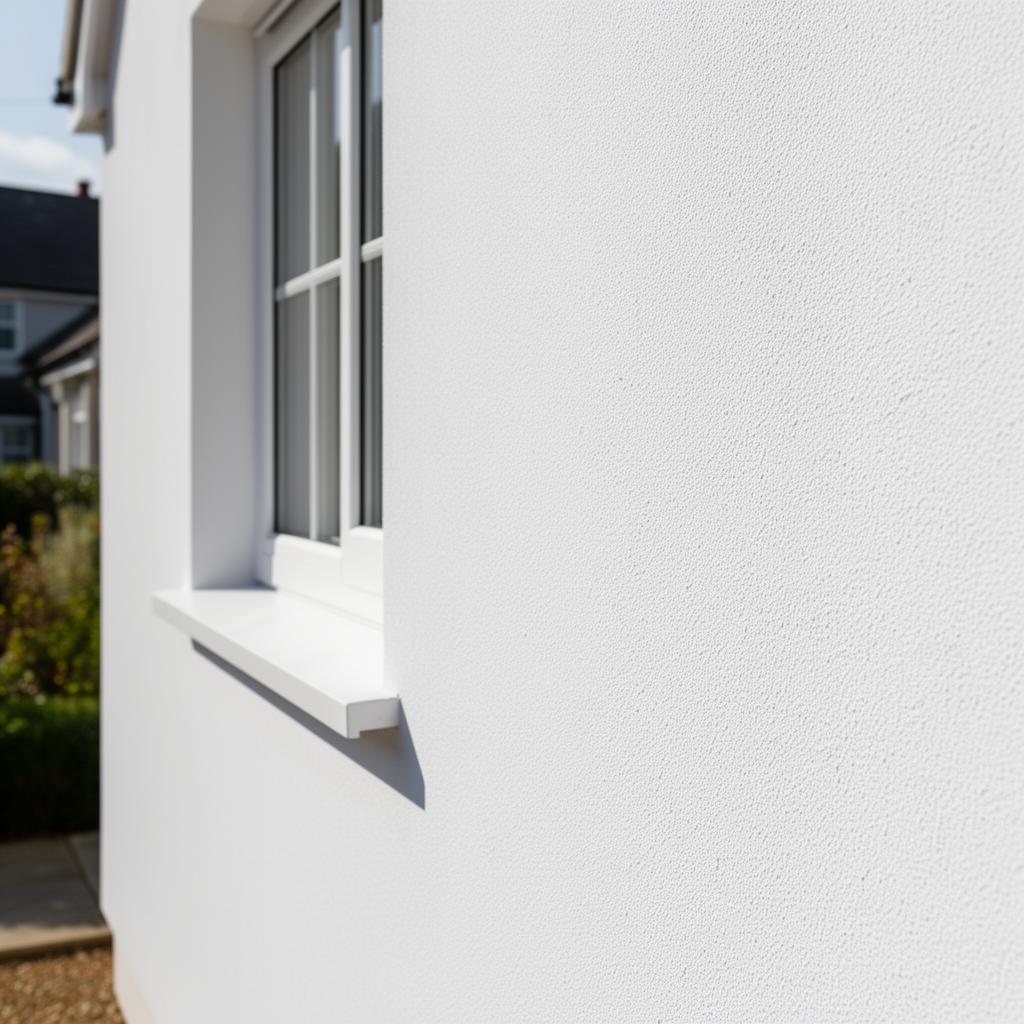
Milton Abbot property owners usually call about colour rather than dirt. Growth flattens the tone of a painted render and cob finish long before anyone would call the wall unclean.
The Devon detail
- Typical roof covering here is slate, which affects what washes down onto the walls.
- Access is usually via A386 and A390.
- Nearest full coverage hub: Tavistock (PL19), West Devon Borough Council.
- Tavistock sits about 2.3 miles from Milton Abbot on our round, so visits are often shared.
- Postcode district: PL19. County: Devon. Approx 15.8 miles from the PL3 base.
painted render and cob and what it needs
- Render that has lost its water repellency absorbs surface water instead of shedding it, which extends every damp spell.
- Coloured through-render fades gradually, so what looks like dirt on an older wall is sometimes age in the finish.
- That gets pointed out before work starts rather than discovered halfway through.
- Where a painted wall has been patch-repainted, the patches clean at a different rate.
- Limewash over cob is sacrificial and will lift if treated as though it were masonry paint.
- Where cob has been cement-rendered at some point, that render traps moisture and the wall behaves badly.
Application, dwell and rinse
- 1.Sheeting comes off from the top down so nothing collected on it lands on cleaned work.
- 2.Growth in a shaded return is treated on the same visit even when only the front was asked about, if access allows.
- 3.Ridge and verge debris that has landed on the wall head is brushed off dry before anything wet goes on.
- 4.Fixings for hanging baskets and washing lines are unloaded before the elevation is worked, then put back.
- 5.Vents serving a boiler or flue are checked and left uncovered, with the elevation around them worked dry.
- 6.Weep holes above openings are left clear so the wall can drain the way it was designed to.
- 7.Where a pond or water feature sits below an elevation, it is covered and the run-off diverted well away from it.
- 8.Mortar joints that have already lost material are pointed out and left alone rather than washed further open.
- 9.The mix is made up in small batches as the work moves, rather than one large batch that stands and weakens.
- 10.External light fittings are switched off at the consumer unit before the elevation around them is treated.
The survey we do in Milton Abbot
- 01The angle of morning sun on the elevation tells you how long it stays damp.
- 02A wall that is warmer than its neighbours on a cold morning is likely holding moisture.
- 03Where the pattern is vertical and narrow, plumbing is looked at before chemistry is.
- 04Cracks are traced to their ends, because a crack that runs to an opening behaves differently from one that stops.
- 05Where paint is peeling in flakes rather than powdering, adhesion has already gone.
- 06Whether the growth has spread onto glass and frames tells you how long it has been established.
- 07The state of the pointing is judged at the most exposed corner, not the most convenient one.
- 08A fingernail drawn across the growth says more in a second than a photograph does.
Why order matters more than speed
Gutters are cleared between the roof and the walls, so the first heavy rain does not restain a finished elevation.
A wall treated in autumn goes into winter clean, which is when it matters most.
Anything that involves opening a gutter is done before the ground beneath it is cleaned.
Small repairs to pointing are best done after cleaning, when what needs doing is visible.
What to tell us in advance
- Close and latch every window on the elevations being worked, including any small top lights.
- Say whether the elevation backs onto a public footpath.
- Note where the electricity meter and consumer unit sit relative to the wall.
- Mention whether the drive drains to a soakaway that already struggles in heavy rain.
- Point out ground-floor windows that are painted shut, as they need different masking.
- Point out where the render was patched, since patches clean differently from the original.
- Say if you would prefer the front done on a different day from the back.
- Tell us if there is a septic tank and where its outlet sits.
Practical questions answered
- Will the colour be even afterwards?
- Working bottom-up and one elevation at a time is what keeps it even.
- What is the difference between this and a wash down?
- A wash down removes what you can see. A treatment removes what is growing, which is not the same thing.
- Will the treatment harm my planting?
- Beds are wetted down first so run-off arrives diluted, and rinsing is directed away from anything growing.
- Do I need to move my car?
- It helps. If it cannot be moved we sheet it or work around it.
- Will the wall need doing again next year?
- Not usually. How long it holds depends on shade, run-off and airflow rather than on the treatment.
- Does anyone need to be home?
- No. It is outside work. Access to the elevations, ideally an outside tap, and windows shut for the visit.
- What about the neighbour's side?
- We only work surfaces you own or have permission for, and we check before spraying near a boundary.
- Can you get behind downpipes?
- Yes, by hand. It is the part a sprayed pattern always misses.
Neighbouring places we work
Summary
Low pressure, biocidal treatment, dwell time, controlled rinse. That is the whole method and it is chosen because the finish survives it. A wall is part of a system that includes the roof above it and the ground below it. Water in the wrong place explains most tired elevations, and it is cheaper to fix than to keep cleaning. Monday to Saturday, 8am to 7pm.
Ask for the method in writing
Scope and approach written down means there is nothing to argue about later.
Quote for a Milton Abbot property
Monday to Saturday, 8am – 7pm