
Green walls in Pomphlett? Start here
pebbledash and painted render walls, concrete tile roofs, 2.5 miles from the yard.
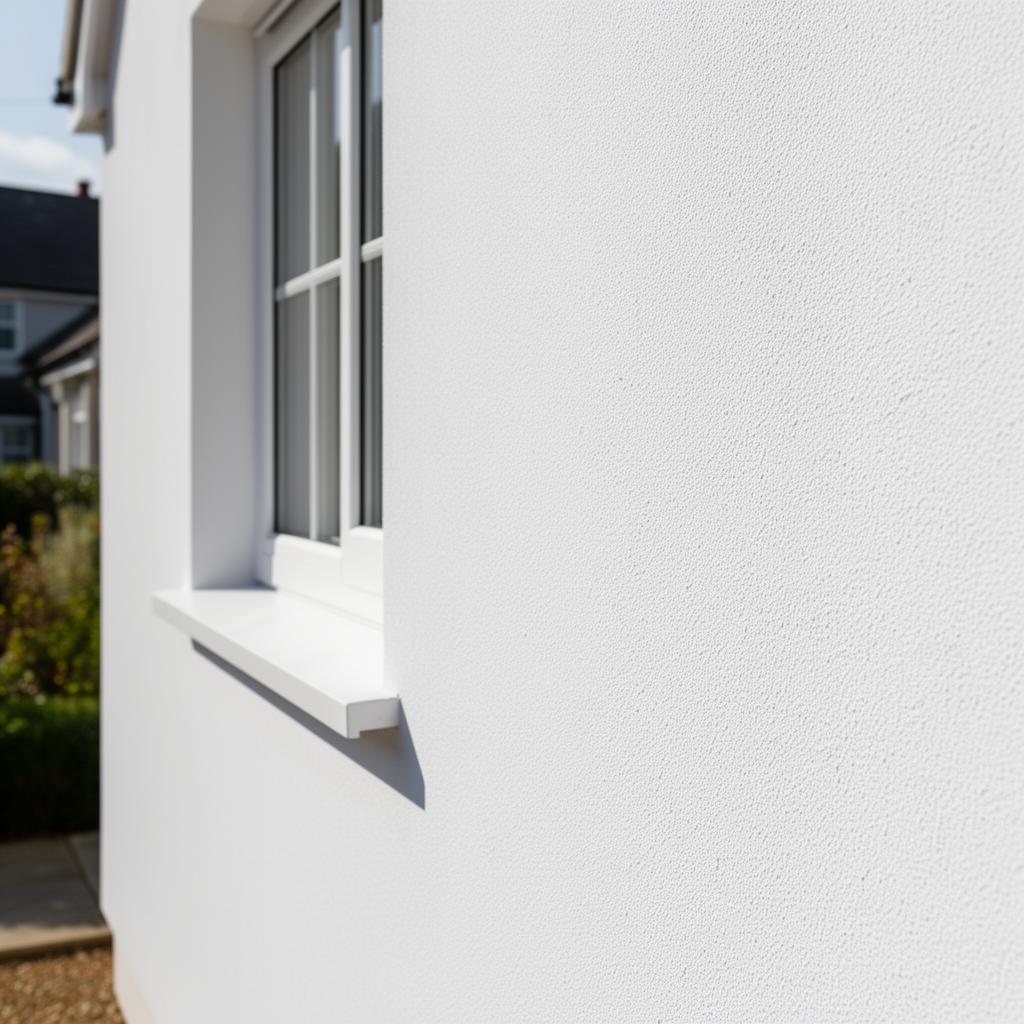
A wall in Pomphlett that has greened over is telling you where water sits. 1960s housing between Plymstock and Billacombe, so the pattern of staining tends to repeat from one property to the next.
Quote for a Pomphlett property
Monday to Saturday, 8am – 7pm
Why walls green up in Pomphlett
- Hedging planted tight to a wall cuts airflow, and still air is the same as slow drying.
- A single missing tile above an elevation can put water onto the same square metre for years.
- Rendered plinths take more water than the main face and are usually the first thing to look tired.
- Driven rain sticks to a wall face rather than running off it, which keeps the surface wet long enough for spores to settle.
- A wall that faces a large expanse of glass on another building gets less sun than its aspect suggests.
- A wall that never takes direct sun stays damp for hours after everything else has dried, and that extra time is the whole story.
- Where a wall carries a heavy climbing plant, the fabric behind it is nearly always damper than the rest.
- Silt washed down from the roof leaves a thin feeding layer on the render below.
- A downpipe discharging onto a hard surface next to the wall sends the water straight back at the brickwork.
What the staining pattern tells us
- 01Photographs taken before work provide the reference for judging the result later.
- 02Where the pattern is a band at the bottom, splash from the ground is doing it.
- 03A short section of hose test shows whether run-off drains away or ponds at the base.
- 04Anything that cannot be explained by water is treated with more caution, not less.
- 05Any staining that continues below ground level is a drainage question, not a cleaning one.
- 06Where the wall carries a previous coating over render, its edges are inspected for lifting.
- 07The elevation is read from the pavement first and from a metre away second.
- 08The state of the pointing is judged at the most exposed corner, not the most convenient one.
Getting a Pomphlett property ready
- Let us know if anyone in the house works nights and needs quiet at a particular time.
- Unlock side gates the night before if you are not going to be in, because a locked passage stops a whole elevation.
- Say whether the elevation backs onto a public footpath.
- Point out any alarm sensor mounted externally on the elevation.
- Let us know if the property is listed or in a conservation area, as it affects method choice.
- Mention any planned decorating so the drying window can be built into the date.
- Note the position of the stopcock in case the outside tap needs isolating.
- Move cars off a drive that runs tight to the house if you can, and tell us if you cannot.
What the surface will and will not take
- Bead edges and stop ends on a rendered elevation are the details worth protecting from driven water.
- A rendered wall under a failed drip detail restains within a season however well it was cleaned.
- Loose stones are a sign the bedding coat is going, and washing harder simply speeds that up.
- Pebbledash holds far more surface area than smooth render, so it carries more growth for the same exposure.
- That gets pointed out before work starts rather than discovered halfway through.
- Gloss-painted details like cills are wiped rather than sprayed.
The method we would use in Pomphlett
- 1.A short rinse of the whole face at the end removes residue rather than removing growth, which is a different job done at a different pressure.
- 2.Any window left open is closed, or that section is skipped and left for a second visit.
- 3.Vents, extractor terminals and trickle vents get taped, because water pushed into them is the one thing that turns an exterior job into an interior one.
- 4.On render below a flat roof edge, the drip detail is checked, because a failed one puts the stain straight back.
- 5.Anything applied is applied once and given time, rather than applied twice in a hurry to look busy.
- 6.Weep holes above openings are left clear so the wall can drain the way it was designed to.
- 7.Where a property has solar panels on a wall-facing slope, the array is sheeted before treatment starts below.
- 8.The finished wall is photographed in the same light as the start photograph, so the comparison is honest.
- 9.The same operator works a whole elevation so the application rate stays consistent across it.
- 10.Any electric meter box, alarm bell or external socket is bagged before the lance comes out.
Straight answers before you book
- Will treatment damage a wildlife pond?
- Ponds are sheeted and run-off is diverted well away from them.
- How do you price the work?
- By elevation area and access, put in writing before anything starts.
- Should I fix the downpipe before or after?
- Before, if it is the cause. Cleaning around a live leak puts the stain straight back.
- Do you clean render above a flat roof?
- Yes, with the roof covering sheeted and the drip detail checked.
- Can you remove ivy marks?
- Suckers can be treated and weathered off, though the shadow of an old ivy run can take a season to fade fully.
- What about the neighbour's side?
- We only work surfaces you own or have permission for, and we check before spraying near a boundary.
- Is the method different on a listed building?
- The approach is gentler still, and lime finishes are treated with the lowest strength that will work.
- What happens if it rains on the day?
- Light rain is workable. Persistent rain moves the visit rather than compromising the treatment.
Planning a full exterior in Pomphlett
Conservatory roofs go before the wall above them, then get a final rinse afterwards.
Where gutters need repair rather than clearing, that goes ahead of any cleaning at all.
If windows were cleaned recently, tell us, and they get sheeted rather than redone.
Driveways come after walls so that run-off from the elevation is rinsed away as part of the drive work.
Other Devon places on the same round
PL9 context
- Plymstock sits about 0.6 miles from Pomphlett on our round, so visits are often shared.
- Typical roof covering here is concrete tile, which affects what washes down onto the walls.
- Recorded character: estate. 1960s housing between Plymstock and Billacombe.
- Typical wall finish here is pebbledash and painted render, which sets the cleaning method.
- PL9 covers 8 town hubs and 8 villages or districts in our radius.
The essentials
Low pressure is not a compromise. On render it is the only sensible option. Softwash trades speed for safety on the finish, and that trade is worth making on any coated wall. Gentle and patient beats fast and forceful on any coated finish.
Not sure it is worth doing yet?
Ask, and if the answer is next year we will say so.