
Wall and render softwash near Berry Pomeroy
stone and painted render walls, slate and clay tile roofs, 19.3 miles from the yard.
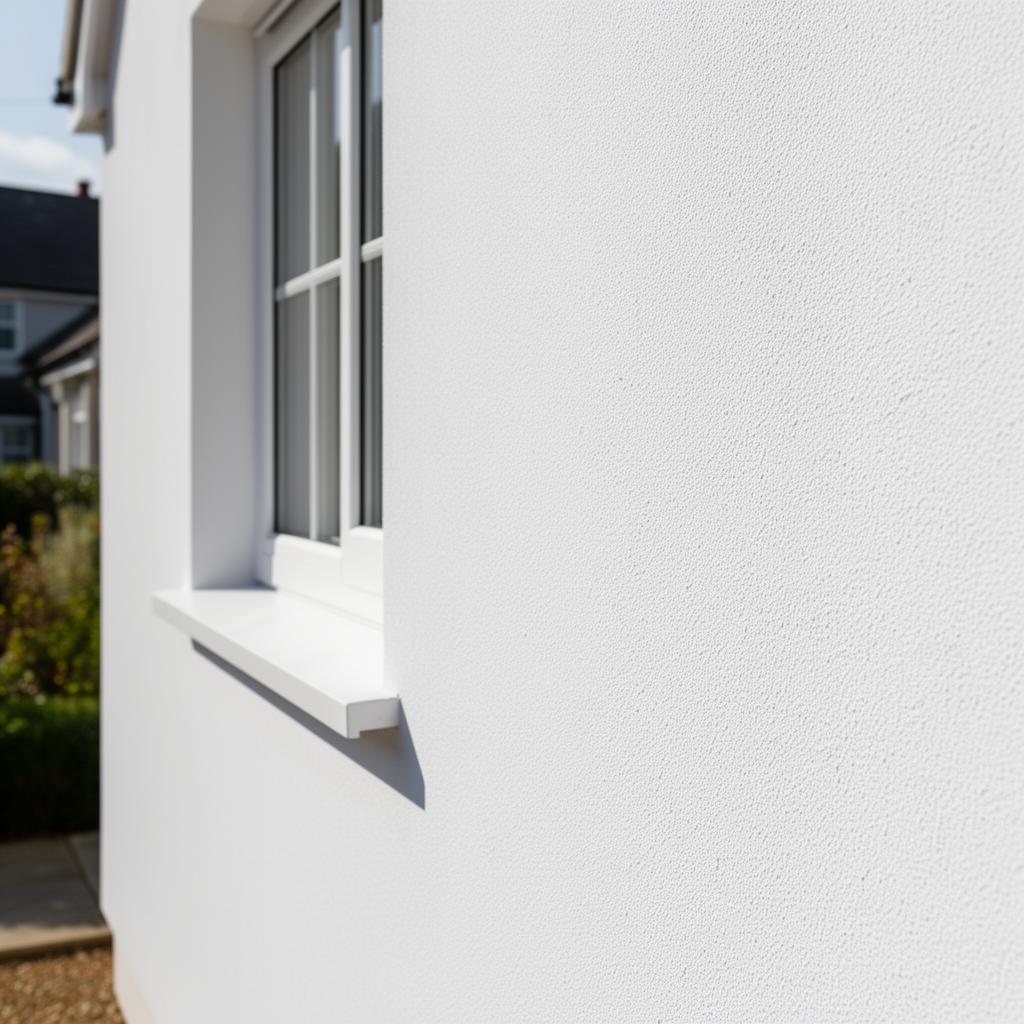
Most enquiries from Berry Pomeroy start with one elevation that has gone darker than the rest. Nine times out of ten the reason is how long that face stays damp, not how dirty it is.
The Devon detail
- Typical wall finish here is stone and painted render, which sets the cleaning method.
- Recorded character: village. Ruined castle and parish east of Totnes.
- Postcode district: TQ9. County: Devon. Approx 19.3 miles from the PL3 base.
- Typical roof covering here is slate and clay tile, which affects what washes down onto the walls.
- TQ9 covers 1 town hubs and 15 villages or districts in our radius.
stone and painted render and what it needs
- Cracks in render change the staining pattern, because water then sits behind the face as well as on it.
- Render responds to dwell time better than almost any other finish, which is what makes softwash suit it.
- That gets pointed out before work starts rather than discovered halfway through.
- A weaker mix and a longer wait suits paint better than anything stronger and faster.
- A stone wall in deep shade holds moss in the joints long after the faces have dried.
- Loose stones and open joints are recorded and left alone rather than washed.
Application, dwell and rinse
- 1.Guttering above a worked elevation is checked for standing water, because a drip mid-treatment ruins an even finish.
- 2.Any window left open is closed, or that section is skipped and left for a second visit.
- 3.Treatment goes on from the bottom of the elevation upwards, which stops clean streaks forming where liquid runs onto dry surface.
- 4.Weep holes above openings are left clear so the wall can drain the way it was designed to.
- 5.Rinsing, where it is needed at all, runs top down at a pressure you could hold your hand in front of.
- 6.Airbricks are covered for the duration and uncovered before we leave, without exception.
- 7.The van is parked so hoses do not cross a footpath, and matting goes down where they have to.
- 8.Where a property is rendered onto insulation, extra care goes into avoiding water at the bead edges.
- 9.Water is drawn from an outside tap where there is one, and carried on the van where there is not.
- 10.Ground-level splash marks are worked separately from the main face, since they are silt rather than growth.
The survey we do in Berry Pomeroy
- 01Any staining that continues below ground level is a drainage question, not a cleaning one.
- 02The ground level relative to the damp course is checked before the base of a wall is treated.
- 03Where the wall carries a previous coating over render, its edges are inspected for lifting.
- 04Colour matters: green suggests algae, black suggests fungal spotting, grey-white crust suggests lichen.
- 05A fingernail drawn across the growth says more in a second than a photograph does.
- 06The condition of the cills tells you how much water has been running down the face.
- 07Where a wall meets a roof abutment, the flashing is looked at first.
- 08Where the pattern is vertical and narrow, plumbing is looked at before chemistry is.
Sequencing the outside of the house
Anything that involves opening a gutter is done before the ground beneath it is cleaned.
Driveways come after walls so that run-off from the elevation is rinsed away as part of the drive work.
Where a roof clean is planned for later in the year, walls are worth leaving until after it.
Where scaffolding is going up for other work, the wall clean is easier and safer while it is standing.
What to tell us in advance
- Say if there is a wasp or bird nest under the eaves, and we will plan around it.
- Note any external socket or garden power run near the base of the wall.
- Note where the electricity meter and consumer unit sit relative to the wall.
- Warn us about a soft lawn or an unmade drive so boards come on the van.
- Flag any recent repair or repaint, because fresh work is treated more gently.
- Mention shared access or a right of way that we will be crossing.
- Let us know whether the gutters have been cleared in the last couple of years.
- Let us know if anyone in the house works nights and needs quiet at a particular time.
Straight answers before you book
- Do you jet wash walls?
- Not on render, pebbledash or paint. Pressure takes the finish off with the growth and brings the problem back sooner.
- Can you do it while I am at work?
- Yes, as long as gates are unlocked and we can reach the elevations.
- What if there is a wasp nest under the eaves?
- We stop and leave that section. It gets picked up after the nest has been dealt with.
- Can you get behind downpipes?
- Yes, by hand. It is the part a sprayed pattern always misses.
- What if part of the wall does not come up?
- It is left to weather rather than pushed harder, and we will say what we think is happening.
- Do you offer a maintenance visit?
- A lighter top-up treatment every couple of years is much less work than leaving it until it is heavy again.
- Is it worth cleaning a wall in winter?
- Yes. Cool damp conditions suit the method, and heavy rain during application is the only real obstacle.
- How soon can the walls be painted afterwards?
- Once fully dry, which in practice means giving it several dry days.
Other Devon places on the same round
The essentials
One elevation, two elevations or the whole property. The method does not change, only the time it takes. Killing growth and removing growth are two different jobs, and only one of them lasts. Prep takes longer than application, and that is the right way round.
Ask for the method in writing
Scope and approach written down means there is nothing to argue about later.
Quote for a Berry Pomeroy property
Monday to Saturday, 8am – 7pm