
Chipshop exterior wall softwash, Devon
cob and painted render walls, slate roofs, 14.7 miles from the yard.
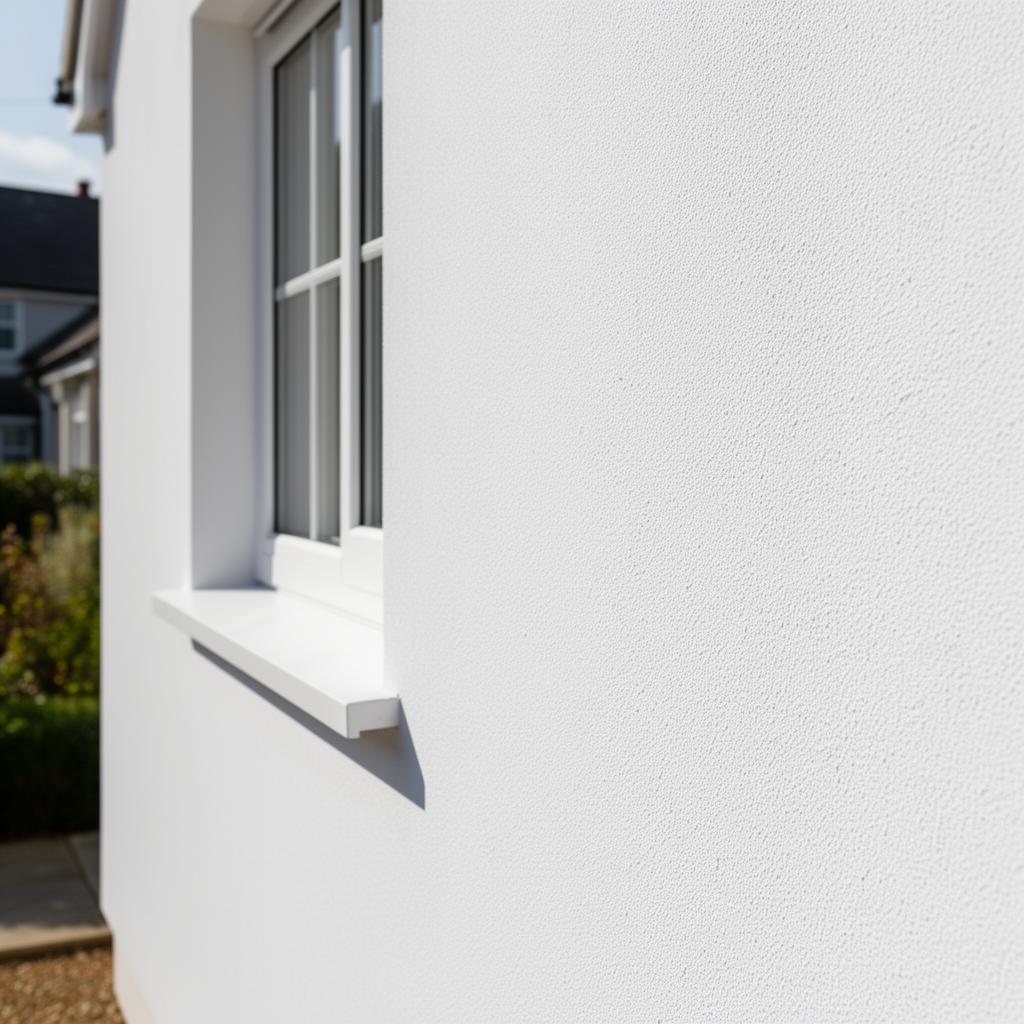
Chipshop property owners usually call about colour rather than dirt. Growth flattens the tone of a cob and painted render finish long before anyone would call the wall unclean.
Quote for a Chipshop property
Monday to Saturday, 8am – 7pm
Why walls green up in Chipshop
- Silt washed down from the roof leaves a thin feeding layer on the render below.
- Bird activity along a gutter line concentrates nutrients on the wall directly below it.
- A wall next to a busy road picks up a film of traffic grime that holds moisture on the surface.
- Salt-laden air roughens exposed surfaces slightly, and rougher surfaces hold more moisture.
- Mild damp winters here keep growth metabolising through months that would stop it in a colder, drier county.
- North and east elevations dry last and green first, in that order, on nearly every property.
- A patio laid up against a wall reflects splash onto it every time it rains hard.
- Shading from a neighbouring building can matter more than the aspect of the wall itself.
- Frost damage opens the surface slightly, which gives the next season's growth somewhere to sit.
What the staining pattern tells us
- 01The ground level relative to the damp course is checked before the base of a wall is treated.
- 02A slow walk of the gutter line from the ground finds most of the causes worth fixing.
- 03The elevation is read from the pavement first and from a metre away second.
- 04Where the pattern is a band at the bottom, splash from the ground is doing it.
- 05The mortar is tested with a key at a discreet point, since soft mortar sets the whole method.
- 06Any staining that continues below ground level is a drainage question, not a cleaning one.
- 07Where paint is peeling in flakes rather than powdering, adhesion has already gone.
- 08Old repair patches are identified early, because they take treatment differently from the surrounding finish.
Getting a Chipshop property ready
- Trim back anything that has grown tight against the wall, or ask us to work around it.
- Say where the outside tap is, and whether it runs at any pressure.
- Let us know if a neighbour parks under the wall on certain days.
- Tell us about any previous treatment that came back quickly, and how quickly.
- Let us know if scaffold or a tower is already up for other work.
- Point out any alarm sensor mounted externally on the elevation.
- Move cars off a drive that runs tight to the house if you can, and tell us if you cannot.
- Point out any window that does not seal properly, so it gets sheeted rather than sprayed near.
What the surface will and will not take
- A rendered plinth takes more water than the face above it and is usually the first band to look tired.
- Render that has lost its water repellency absorbs surface water instead of shedding it, which extends every damp spell.
- Chalking paint is a rougher surface than new paint, which is why older painted walls green faster.
- Masonry paint over render adds a film that traps moisture if the substrate was damp when it was applied.
- Cob and lime-finished walls are moisture-sensitive by design.
- Growth on cob is usually treated in light passes with long gaps rather than one wet application.
The method we would use in Chipshop
- 1.Treatments are kept away from vegetable beds entirely, with those sections sheeted rather than diluted.
- 2.Treatment goes on from the bottom of the elevation upwards, which stops clean streaks forming where liquid runs onto dry surface.
- 3.Boundary walls and gate piers are treated in the same visit only if they take the same method as the house.
- 4.Chimney stacks are treated from a position that keeps the operator off the roof covering entirely.
- 5.External light fittings are switched off at the consumer unit before the elevation around them is treated.
- 6.Neighbouring cars and windows are checked before spraying starts on a boundary elevation.
- 7.Fence panels tight against a wall are wetted first so run-off does not sit on dry timber.
- 8.The elevation is walked first and anything loose, open or already failing is noted before a drop of water goes near it.
- 9.The lower band of an elevation is checked for salt or silt staining, which is rinsed rather than treated.
- 10.Where growth has spread onto a UPVC panel or door surround, it is wiped rather than sprayed.
Asked most often in PL19
- What about the windows afterwards?
- Frames and glass in the spray path are wiped as the masking comes off.
- Does softwash actually kill the growth or just wash it off?
- It kills it. The treatment is left on long enough to work, which is why the surface keeps lightening for a week or two after the visit.
- Can you tell from a photo whether it will clean up?
- Usually yes for surface growth. Staining that is in the material is harder to judge without seeing it.
- Can you quote from photographs?
- For most straightforward jobs, yes. Awkward access is worth a look in person.
- What happens if it rains on the day?
- Light rain is workable. Persistent rain moves the visit rather than compromising the treatment.
- Can you work in cool damp weather?
- Yes. Wall softwash is fine in cool damp conditions. Heavy rain during application is the only real blocker.
- Will it damage the pointing?
- No. That is exactly what pressure does and softwash avoids.
- Do you have a minimum size of job?
- A single gable or a porch is still worth doing properly.
Why order matters more than speed
Glass is done last on any multi-service visit, since it picks up whatever the earlier stages put in the air.
A wall treated in autumn goes into winter clean, which is when it matters most.
Anything that involves opening a gutter is done before the ground beneath it is cleaned.
Conservatory roofs go before the wall above them, then get a final rinse afterwards.
Close to Chipshop
PL19 context
- Typical wall finish here is cob and painted render, which sets the cleaning method.
- Tavistock sits about 1.2 miles from Chipshop on our round, so visits are often shared.
- Typical roof covering here is slate, which affects what washes down onto the walls.
- Postcode district: PL19. County: Devon. Approx 14.7 miles from the PL3 base.
- Access is usually via A386 and A390.
Chipshop wall softwash, in short
The difference between rinsing and treating is invisible on the day and obvious six months later. One elevation done properly is better than four done quickly. Softwash trades speed for safety on the finish, and that trade is worth making on any coated wall.
Selling the house?
Clean elevations change the first photograph, and the first photograph is what gets viewings.