
Cleaning tired walls in Puslinch
painted stone and render walls, slate roofs, 7.9 miles from the yard.
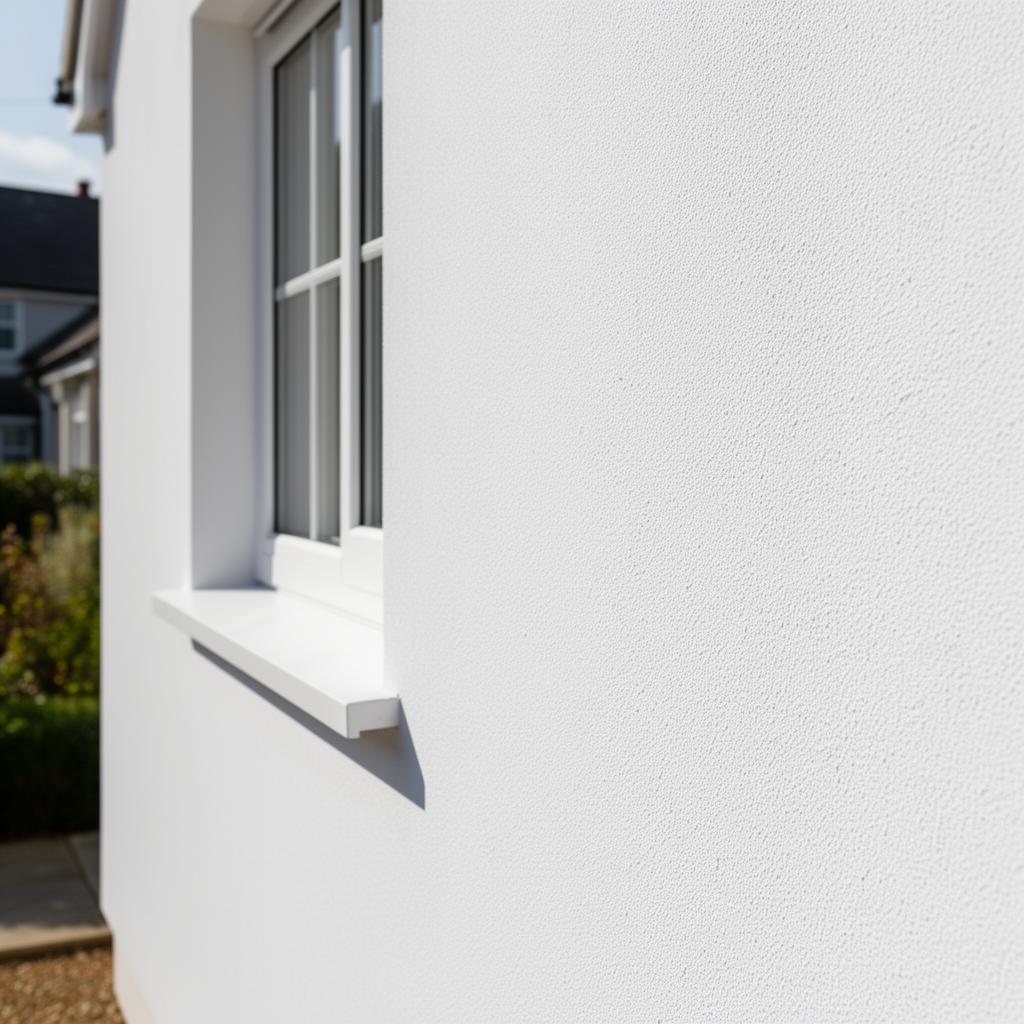
This page covers wall and render softwash for Puslinch only, roughly 7.9 miles from our PL3 base and worked with the Yealmpton round. Roofs, gutters and hard surfaces have their own pages.
Quote for a Puslinch property
Monday to Saturday, 8am – 7pm
Why walls green up in Puslinch
- A leaking outside tap or an unlagged pipe can be the entire reason one corner of a house looks different from the rest.
- Prevailing wind decides which elevation takes driven rain, and that elevation is nearly always the tired-looking one.
- Sheltered gable ends collect airborne spores because there is no wind to move them along.
- The lowest metre of any wall takes splash-back off the path and stains from the ground up, not the top down.
- North-east corners hold frost longest and thaw slowest, which extends the damp window every morning.
- Mild damp winters here keep growth metabolising through months that would stop it in a colder, drier county.
- The first sign is usually a faint grey cast rather than green, and grey is easier to ignore.
- Once lichen is established it holds water itself, which makes the surface beneath it wetter than it started.
- Roof debris shed from a mossy slope lands on the same band of wall year after year.
What the staining pattern tells us
- 01Hollow-sounding render is checked by tapping before any water is put onto it.
- 02A short section of hose test shows whether run-off drains away or ponds at the base.
- 03The direction the growth thickens in points at the source of the moisture.
- 04Whether the render is thin-coat or traditional is checked at a bead or a reveal.
- 05A slow walk of the gutter line from the ground finds most of the causes worth fixing.
- 06The age of the finish is estimated before a strength of mix is chosen.
- 07The underside of the soffit is checked, because staining there rarely stays there.
- 08Where the pattern is even across the whole face, exposure and aspect are the cause.
Getting a Puslinch property ready
- Let us know whether the gutters have been cleared in the last couple of years.
- Tell us if there is a low wall or a step at the base of the elevation that gets slippery.
- Tell us if there is a septic tank and where its outlet sits.
- Say if any part of the wall has been jet washed before, and roughly when.
- Say whether the elevation backs onto a public footpath.
- Point out ground-floor windows that are painted shut, as they need different masking.
- Say where the outside tap is, and whether it runs at any pressure.
- Mention any glazing you already know is cracked before work starts.
What the surface will and will not take
- Coloured through-render fades gradually, so what looks like dirt on an older wall is sometimes age in the finish.
- Render responds to dwell time better than almost any other finish, which is what makes softwash suit it.
- Peeling in flakes means adhesion has gone; powdering under the hand means the surface has simply aged.
- Gloss-painted details like cills are wiped rather than sprayed.
- A stone wall in deep shade holds moss in the joints long after the faces have dried.
- Treatment on stone is applied in stages so it soaks into the joints rather than running off the faces.
The method we would use in Puslinch
- 1.On render below a flat roof edge, the drip detail is checked, because a failed one puts the stain straight back.
- 2.The lance tip is changed rather than the pressure raised whenever coverage is not even enough.
- 3.Any surface that will be walked on afterwards is left rinsed rather than left with residue.
- 4.A wall carrying a house number, plaque or bell push has those items worked around by hand.
- 5.Weep holes above openings are left clear so the wall can drain the way it was designed to.
- 6.Mortar joints that have already lost material are pointed out and left alone rather than washed further open.
- 7.Timber decking or a doorstep directly under the work is covered rather than rinsed afterwards.
- 8.A wall with a visible damp patch inside is treated on the dry areas only until the cause is found.
- 9.Treatments are kept away from vegetable beds entirely, with those sections sheeted rather than diluted.
- 10.Guttering above a worked elevation is checked for standing water, because a drip mid-treatment ruins an even finish.
Practical questions answered
- Do you clean conservatory roofs?
- Yes, and they go before the wall above them so nothing lands back on clean glazing.
- What about the windows afterwards?
- Frames and glass in the spray path are wiped as the masking comes off.
- Is there any risk to the guttering?
- No. It sits in the same spray path and gets wiped as part of the pass.
- Can I get the roof done at the same time?
- Yes, and the roof goes first so what comes off it does not land on clean walls.
- Do you take the waste away?
- There is very little on a wall job. What comes off the surface is rinsed to a drain that can take it.
- Can you work while builders are on site?
- Better after they finish, so their dust and debris does not land on clean work.
- How do I know it is algae and not damp coming through?
- Surface growth wipes and lightens. Damp coming through darkens the wall from behind and returns as soon as it dries out.
- What about air bricks and vents?
- Covered for the duration, uncovered before we leave.
What to book before and after the walls
Where gutters need repair rather than clearing, that goes ahead of any cleaning at all.
If windows were cleaned recently, tell us, and they get sheeted rather than redone.
Anything that involves opening a gutter is done before the ground beneath it is cleaned.
Where a roof clean is planned for later in the year, walls are worth leaving until after it.
Neighbouring places we work
PL8 context
- Postcode district: PL8. County: Devon. Approx 7.9 miles from the PL3 base.
- Recorded character: estuary hamlet. Yealm-side hamlet south of Yealmpton.
- Nearest full coverage hub: Yealmpton (PL8), South Hams District Council.
- Typical wall finish here is painted stone and render, which sets the cleaning method.
- Access is usually via A379.
Related reading for Puslinch walls
Summary
Method, dwell, rinse, check. There is nothing else to it. The safest method is the one set by the weakest material on the wall, not the strongest. The difference between rinsing and treating is invisible on the day and obvious six months later. Monday to Saturday, 8am to 7pm.
Book before the wet months
A wall treated now goes into winter clean, which is when the difference is most visible.