
Render and wall cleaning in Burraton
painted render and stone walls, slate and concrete tile roofs, 4.8 miles from the yard.
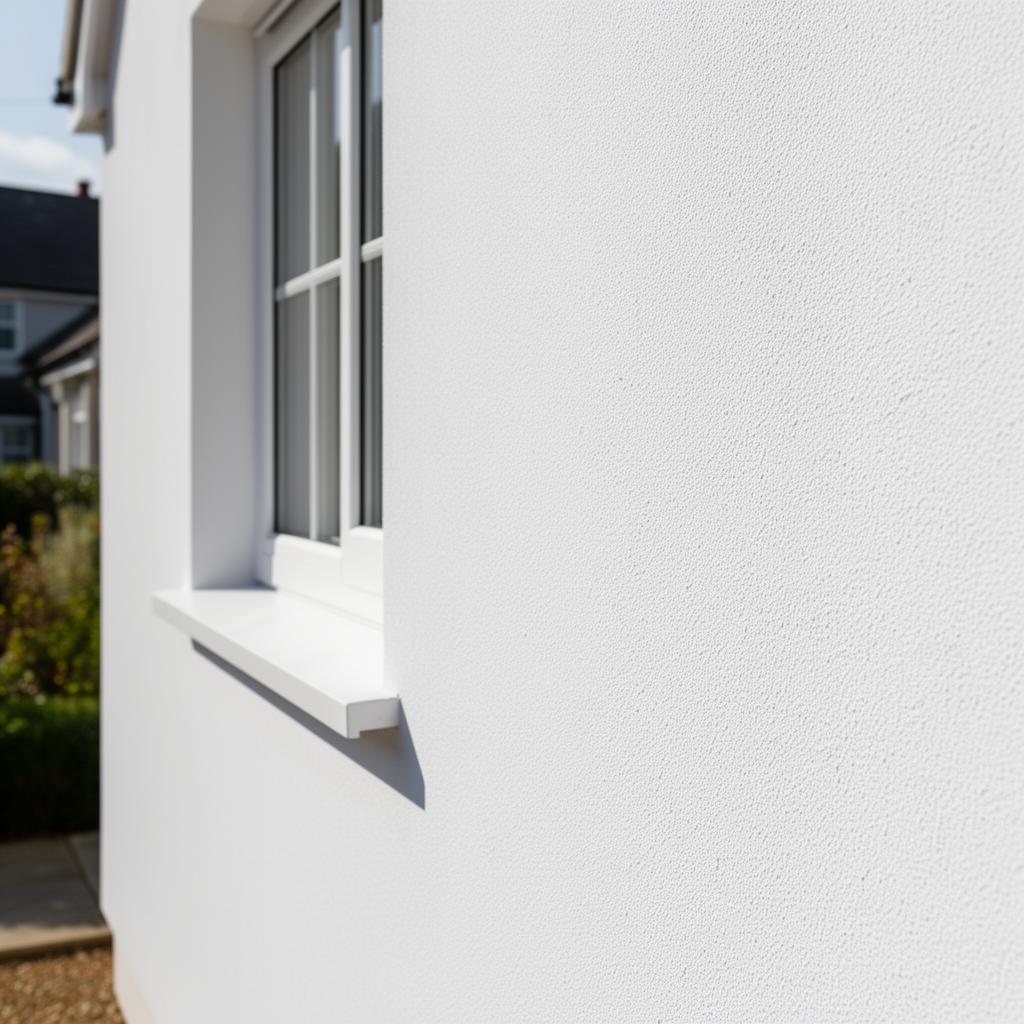
This page covers wall and render softwash for Burraton only, roughly 4.8 miles from our PL3 base and worked with the Saltash round. Roofs, gutters and hard surfaces have their own pages.
The Cornwall detail
- Typical wall finish here is painted render and stone, which sets the cleaning method.
- Postcode district: PL12. County: Cornwall. Approx 4.8 miles from the PL3 base.
- Nearest full coverage hub: Saltash (PL12), Cornwall Council.
- PL12 covers 8 town hubs and 13 villages or districts in our radius.
- Recorded character: village. North Saltash village around Burraton Coombe.
painted render and stone and what it needs
- A rendered plinth takes more water than the face above it and is usually the first band to look tired.
- Bead edges and stop ends on a rendered elevation are the details worth protecting from driven water.
- Chalking paint is a rougher surface than new paint, which is why older painted walls green faster.
- Colour on a painted wall usually returns once the film on top is removed.
- Method is set by the softest thing on the wall, not the hardest.
- Loose stones and open joints are recorded and left alone rather than washed.
Application, dwell and rinse
- 1.Render beads and stop ends are inspected as work reaches them, because a lifted bead traps water behind the finish.
- 2.The colour keeps improving for a fortnight after the visit as dead growth loses its grip and weathers away.
- 3.Where a property is rendered onto insulation, extra care goes into avoiding water at the bead edges.
- 4.Access equipment is footed on boards where the ground is soft, so nothing sinks into a lawn.
- 5.Steps and thresholds get a plain water rinse at the end so nothing is left slippery.
- 6.Corners are worked from both directions so the overlap sits in the angle and not on the open face.
- 7.The wall is left to dry naturally rather than being wiped, which is what keeps the finish even.
- 8.Guttering above a worked elevation is checked for standing water, because a drip mid-treatment ruins an even finish.
- 9.A wall carrying a house number, plaque or bell push has those items worked around by hand.
- 10.Where a wall has been previously jet washed, the damaged band is treated at a reduced strength.
The survey we do in Burraton
- 01The ground level relative to the damp course is checked before the base of a wall is treated.
- 02A fingernail drawn across the growth says more in a second than a photograph does.
- 03Whether the growth has spread onto glass and frames tells you how long it has been established.
- 04Cracks are traced to their ends, because a crack that runs to an opening behaves differently from one that stops.
- 05Where the pattern is a band at the bottom, splash from the ground is doing it.
- 06The angle of morning sun on the elevation tells you how long it stays damp.
- 07Weep holes are counted and checked for blockage while the wall is being read.
- 08Where a wall meets a roof abutment, the flashing is looked at first.
First, next, last
A wall treated in autumn goes into winter clean, which is when it matters most.
Roof work always precedes wall work, because everything released from the slope lands on the elevation below it.
Driveways come after walls so that run-off from the elevation is rinsed away as part of the drive work.
Block paving cannot be re-sanded until it is dry, which decides the running order in a wet week.
What to tell us in advance
- Say whether the side passage is wide enough for a wheeled kit trolley.
- Clear the base of the elevation of pots, ornaments and loose paving where you can.
- Let us know if the property is listed or in a conservation area, as it affects method choice.
- Mention any glazing you already know is cracked before work starts.
- Tell us where the drains run if the garden has a soakaway rather than a mains connection.
- Say if the elevation is overlooked by a neighbouring window that should stay shut.
- Tell us if a gutter has been overflowing, because that changes what we look at first.
- If a security light or camera covers the elevation, tell us so it can be isolated.
Straight answers before you book
- Do you take the waste away?
- There is very little on a wall job. What comes off the surface is rinsed to a drain that can take it.
- Can you deal with black spotting on white render?
- That is usually a fungal spot rather than algae. It responds to treatment but often needs a second lighter pass.
- What if part of the wall does not come up?
- It is left to weather rather than pushed harder, and we will say what we think is happening.
- Will treatment damage a wildlife pond?
- Ponds are sheeted and run-off is diverted well away from them.
- Will it damage the pointing?
- No. That is exactly what pressure does and softwash avoids.
- Will the wall need doing again next year?
- Not usually. How long it holds depends on shade, run-off and airflow rather than on the treatment.
- Should the gutters be done at the same time?
- Usually. Overflow is behind a large share of wall staining, so clearing it protects the work.
- Is the finish even across the wall?
- That is the main reason we work bottom-up and one elevation at a time.
Where to go next
Other Cornwall places on the same round
The essentials
One elevation done properly is better than four done quickly. The wall dictates the method. Everything else on this page follows from that one rule. A first clean is the heavy one. What follows is maintenance, and maintenance is quicker every time.
Not sure whether it is walls or gutters?
Send a picture of the staining pattern. Where it sits usually tells us what is causing it.
Quote for a Burraton property
Monday to Saturday, 8am – 7pm