
Cleaning tired walls in Peter Tavy Village
granite and painted render walls, slate roofs, 13.6 miles from the yard.
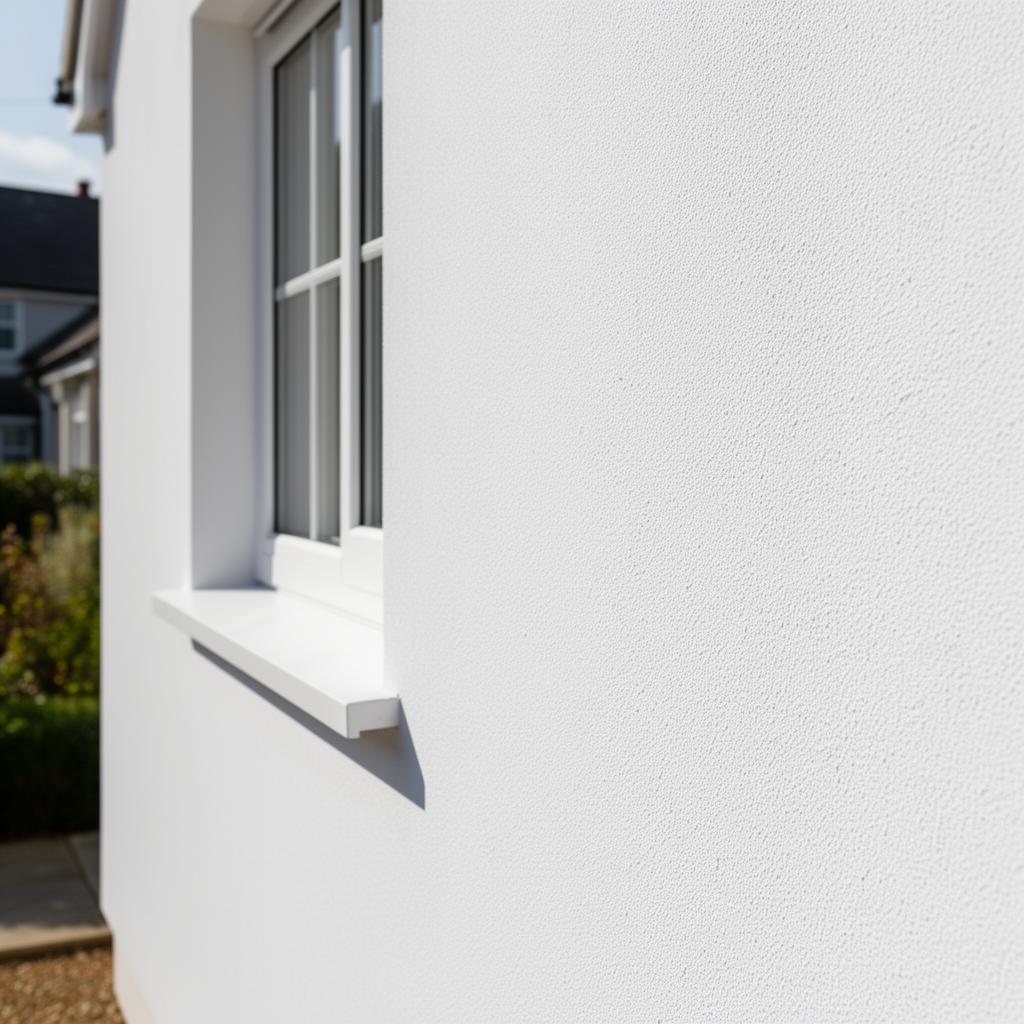
Peter Tavy Village property owners usually call about colour rather than dirt. Growth flattens the tone of a granite and painted render finish long before anyone would call the wall unclean.
The Devon detail
- Typical wall finish here is granite and painted render, which sets the cleaning method.
- Recorded character: moorland hamlet. Twin-village to Mary Tavy on the Tavy's east bank.
- Typical roof covering here is slate, which affects what washes down onto the walls.
- Nearest full coverage hub: Peter Tavy (PL19), West Devon Borough Council.
- Access is usually via local lanes off A386.
granite and painted render and what it needs
- Modern render, whether sand and cement or a thin-coat system, has a slightly porous face that holds airborne spores.
- Patched render takes treatment differently from the original, which is why patches are identified before work starts.
- That gets pointed out before work starts rather than discovered halfway through.
- Colour on a painted wall usually returns once the film on top is removed.
- Treatment kills lichen and lets it weather off, which is slower to look finished than a pressure wash but leaves the face intact.
- Pressure on granite blows out the joints long before it touches the stone.
Application, dwell and rinse
- 1.Painted elevations get a small test patch first, low down and out of sight, so failing paint is found deliberately rather than by accident.
- 2.Downpipe backs and the strip of wall behind them are done by hand, because a sprayed pattern always misses them.
- 3.Water is drawn from an outside tap where there is one, and carried on the van where there is not.
- 4.Old paint flakes are removed by hand before treatment rather than blown around by water.
- 5.Beds and borders at the foot of the wall are soaked with clean water first, so any run-off arrives diluted.
- 6.On thin-coat systems the lance is kept moving, because holding it still in one place is how a shadow mark gets left behind.
- 7.Access equipment is footed on boards where the ground is soft, so nothing sinks into a lawn.
- 8.Waste water is directed to a soakaway or drain that can take it rather than allowed to pond on a lawn.
- 9.Sheltered corners and inside angles hold growth longest and get worked before the open faces.
- 10.Between elevations the kit is rinsed so nothing dries in the line and blocks the fan pattern.
The survey we do in Peter Tavy Village
- 01Colour matters: green suggests algae, black suggests fungal spotting, grey-white crust suggests lichen.
- 02A slow walk of the gutter line from the ground finds most of the causes worth fixing.
- 03The underside of the soffit is checked, because staining there rarely stays there.
- 04Photographs taken before work provide the reference for judging the result later.
- 05Where the wall carries a previous coating over render, its edges are inspected for lifting.
- 06Where the pattern is a band at the top, the gutter line is doing it.
- 07The ground level relative to the damp course is checked before the base of a wall is treated.
- 08The mortar is tested with a key at a discreet point, since soft mortar sets the whole method.
What to book before and after the walls
Rendering or repair work should always finish before cleaning starts, never the other way round.
Block paving cannot be re-sanded until it is dry, which decides the running order in a wet week.
Small repairs to pointing are best done after cleaning, when what needs doing is visible.
A first clean is heavier work than the ones that follow, so the interval afterwards can be longer than people expect.
What to tell us in advance
- Tell us about pets in the garden before the day rather than on it.
- Note the position of the stopcock in case the outside tap needs isolating.
- Let us know if anyone in the house works nights and needs quiet at a particular time.
- Clear the base of the elevation of pots, ornaments and loose paving where you can.
- Point out where the render was patched, since patches clean differently from the original.
- Let us know if the property is listed or in a conservation area, as it affects method choice.
- Let us know if a neighbour parks under the wall on certain days.
- Say if there is a wasp or bird nest under the eaves, and we will plan around it.
Straight answers before you book
- What about the neighbour's side?
- We only work surfaces you own or have permission for, and we check before spraying near a boundary.
- Do you need a parking space?
- Somewhere within hose reach of the elevation is enough.
- Do you have a minimum size of job?
- A single gable or a porch is still worth doing properly.
- Do you take the waste away?
- There is very little on a wall job. What comes off the surface is rinsed to a drain that can take it.
- How long before I can repaint?
- Several dry days after the wall has been treated and rinsed.
- How often does this need doing?
- It depends entirely on shade and exposure. An open elevation holds a long time; a permanently shaded one comes back sooner.
- How long does a visit take?
- A typical two-elevation job is a few hours. A full wrap-around on a larger property is a day.
- Can you do it while I am at work?
- Yes, as long as gates are unlocked and we can reach the elevations.
Other Devon places on the same round
The essentials
Ask what will be used and how long it will be left on. The answers tell you everything. Water in the wrong place explains most tired elevations, and it is cheaper to fix than to keep cleaning. One elevation, two elevations or the whole property. The method does not change, only the time it takes. Monday to Saturday, 8am to 7pm.
Not sure whether it is walls or gutters?
Send a picture of the staining pattern. Where it sits usually tells us what is causing it.
Quote for a Peter Tavy Village property
Monday to Saturday, 8am – 7pm