
Render and wall cleaning in Start
cob and stone walls, slate roofs, 19.4 miles from the yard.
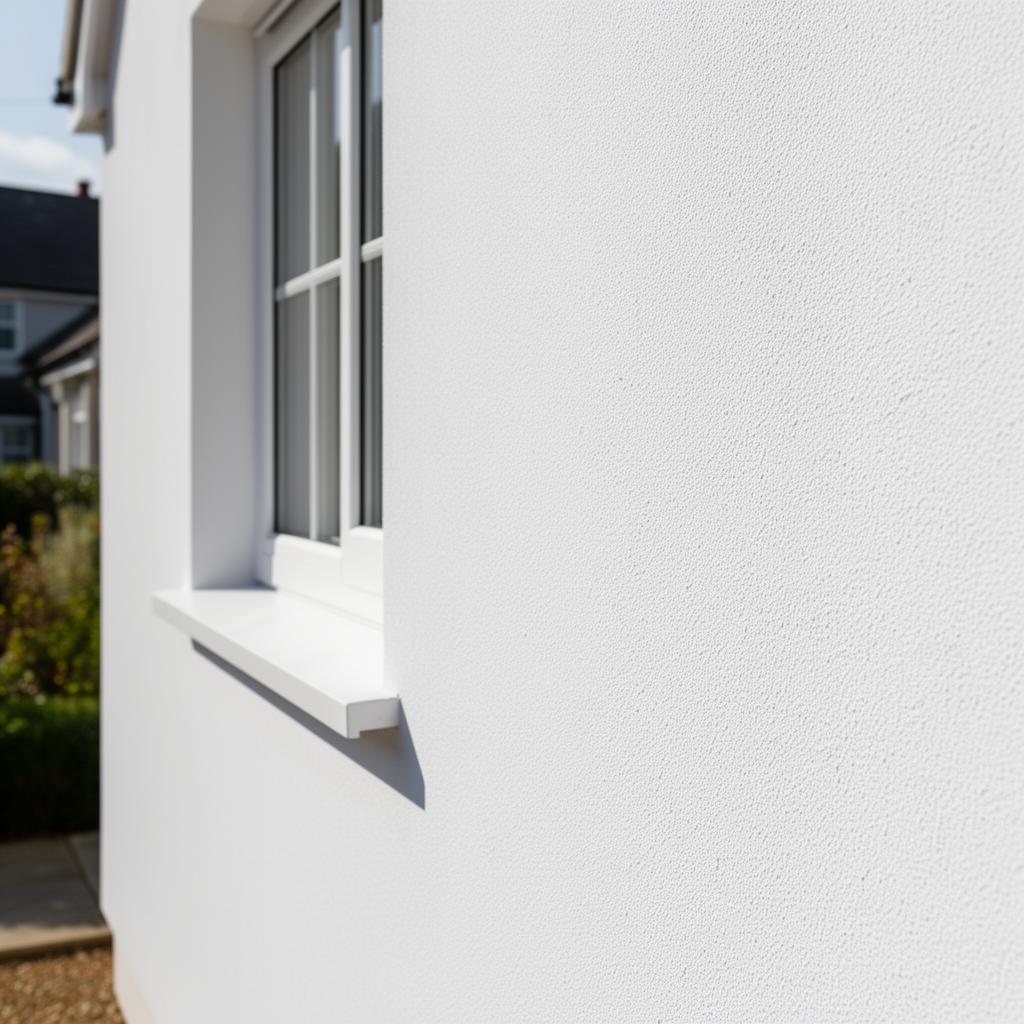
This page is about one job in one place: cleaning cob and stone walls in Start, Devon. Softwash means chemistry and dwell time doing the work rather than pressure.
Quote for a Start property
Monday to Saturday, 8am – 7pm
Why walls green up in Start
- A wall next to a busy road picks up a film of traffic grime that holds moisture on the surface.
- Pebbledash holds water in the shadow of every stone, so it stays damp long after a flat render has dried.
- Where a hose reel or water butt overflows against a wall, the staining follows the overflow path exactly.
- A downpipe discharging onto a hard surface next to the wall sends the water straight back at the brickwork.
- Where a gutter joint weeps rather than pours, the stain is thin, vertical and very persistent.
- Shading from a neighbouring building can matter more than the aspect of the wall itself.
- Concrete render plinths wick moisture upward from the ground more readily than the face above them.
- Rain running off an unsealed timber fascia carries tannin down the wall as a brown stripe, not growth at all.
- Textured coatings have more surface area than smooth ones, and more surface area means more places to hold damp.
What the staining pattern tells us
- 01Whether the property is exposed or sheltered is judged on the day, not from a map.
- 02A damp meter reading inside a stained corner separates a cleaning job from a building problem.
- 03The presence of moss rather than algae suggests standing water rather than damp air.
- 04Where the pattern is even across the whole face, exposure and aspect are the cause.
- 05The age of the finish is estimated before a strength of mix is chosen.
- 06The mortar is tested with a key at a discreet point, since soft mortar sets the whole method.
- 07How quickly a splash of water darkens the surface says how porous the finish has become.
- 08Whether the growth has spread onto glass and frames tells you how long it has been established.
Getting a Start property ready
- Point out where the render was patched, since patches clean differently from the original.
- Trim back anything that has grown tight against the wall, or ask us to work around it.
- Say if a conservatory or lean-to abuts the elevation, so glazing can be sheeted.
- Mention shared access or a right of way that we will be crossing.
- Clear the base of the elevation of pots, ornaments and loose paving where you can.
- Warn us about a soft lawn or an unmade drive so boards come on the van.
- If you have a pond, a water butt or a wildlife area, point it out in advance.
- Let us know if scaffold or a tower is already up for other work.
What the surface will and will not take
- Method is set by the softest thing on the wall, not the hardest.
- Rubble stone walls have deep joints that hold moisture and feed growth from within the joint.
- Cob and lime-finished walls are moisture-sensitive by design.
- Limewash over cob is sacrificial and will lift if treated as though it were masonry paint.
The method we would use in Start
- 1.Paving, steps and paths below the elevation are rinsed clear at the end of the visit.
- 2.Application is by low-pressure fan, closer to a garden sprayer than a washer, and the wall is wetted evenly rather than saturated in patches.
- 3.Windows are checked from inside where access allows, because a closed window with a broken seal still lets water past.
- 4.Any window left open is closed, or that section is skipped and left for a second visit.
- 5.On thin-coat systems the lance is kept moving, because holding it still in one place is how a shadow mark gets left behind.
- 6.Kit is set down on a groundsheet rather than on planting or paving joints.
- 7.The wall is left to dry naturally rather than being wiped, which is what keeps the finish even.
- 8.Expected rain is considered before application because the treatment needs suitable dwell time on the wall.
- 9.Where a property is rendered onto insulation, extra care goes into avoiding water at the bead edges.
- 10.The job is worked one elevation at a time from end to end so that nothing dries out mid-wall.
Practical questions answered
- How is a quote put together?
- By elevation area, surface type and access, written down before anything starts.
- Can you treat a wall that has already been jet washed?
- Yes. The damaged band is worked at a reduced strength because it is more open than the rest.
- Can you work while builders are on site?
- Better after they finish, so their dust and debris does not land on clean work.
- Will the colour be even afterwards?
- Working bottom-up and one elevation at a time is what keeps it even.
- Is thin-coat render different from sand and cement?
- Yes, and it is more sensitive. Thin-coat systems get a weaker mix and a longer dwell rather than more pressure.
- Can you clean a wall with an electric meter on it?
- Yes. The box is bagged before anything is applied around it.
- Do you take the waste away?
- There is very little on a wall job. What comes off the surface is rinsed to a drain that can take it.
- Do you work weekends?
- We work Monday to Saturday, 8am to 7pm.
First, next, last
If a decorator is due, the wall clean goes in first and is given time to dry fully.
Solar panels are cleaned separately from the roof slope they sit on, and after it.
Glass is done last on any multi-service visit, since it picks up whatever the earlier stages put in the air.
Driveways come after walls so that run-off from the elevation is rinsed away as part of the drive work.
Neighbouring places we work
TQ7 context
- Nearest full coverage hub: Kingsbridge (TQ7), South Hams District Council.
- Recorded character: farming hamlet. Farming hamlet inland from Start Point.
- Typical roof covering here is slate, which affects what washes down onto the walls.
- Postcode district: TQ7. County: Devon. Approx 19.4 miles from the PL3 base.
- Kingsbridge sits about 1 miles from Start on our round, so visits are often shared.
Summary
Nothing on this page needs a site visit to price if you can send a couple of clear photographs. An honest no is worth more than a job that was never going to work. Access and surface type decide the plan far more than the size of the house does.
Tell us what you have tried
If a previous clean did not last, that tells us something useful before we quote.