
Softwashing granite and painted render walls around Buckland Abbey
granite and painted render walls, slate roofs, 9.2 miles from the yard.
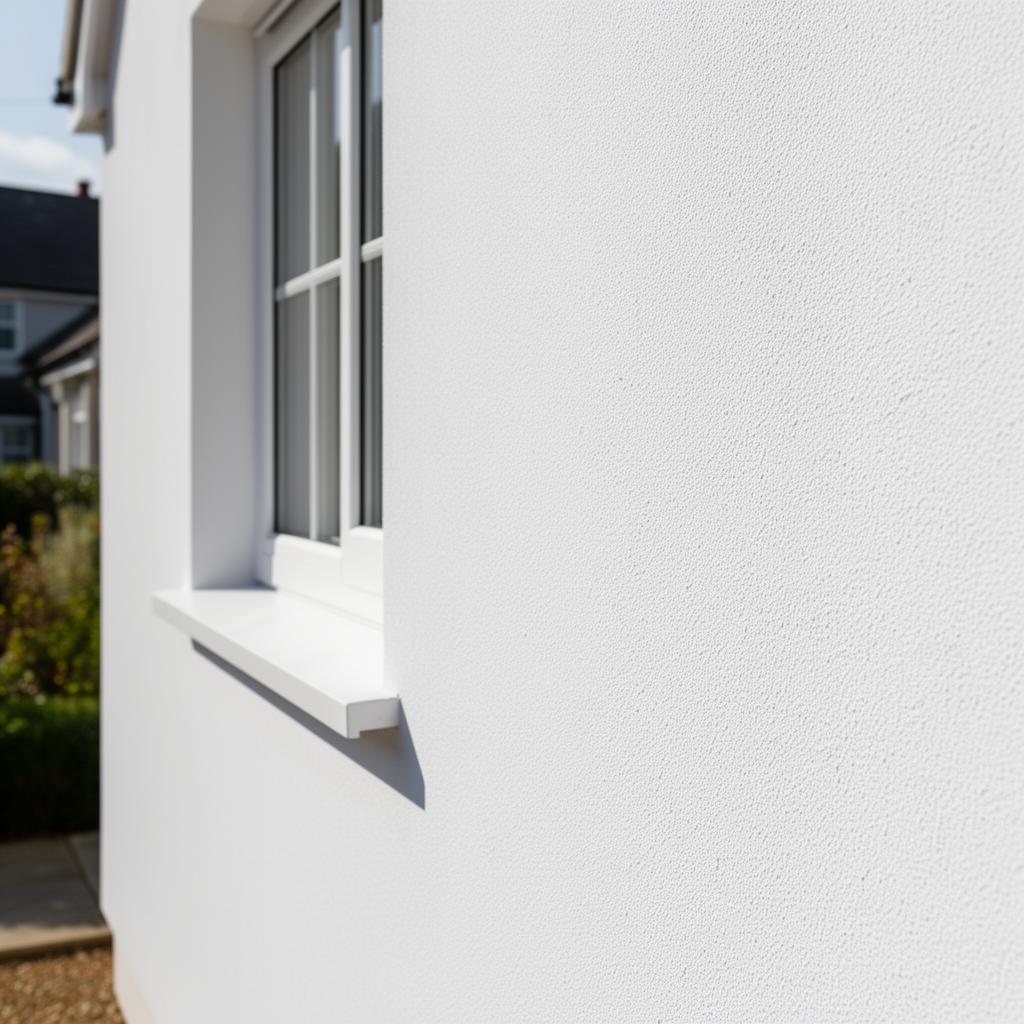
Buckland Abbey property owners usually call about colour rather than dirt. Growth flattens the tone of a granite and painted render finish long before anyone would call the wall unclean.
The Devon detail
- Recorded character: farming hamlet. Drake's home, now National Trust.
- Postcode district: PL20. County: Devon. Approx 9.2 miles from the PL3 base.
- Typical roof covering here is slate, which affects what washes down onto the walls.
- Buckland Monachorum sits about 0.3 miles from Buckland Abbey on our round, so visits are often shared.
- Nearest full coverage hub: Buckland Monachorum (PL20), West Devon Borough Council.
granite and painted render and what it needs
- Thin-coat systems are thinner than people assume, and a jet held still in one place leaves a permanent shadow.
- Render that has lost its water repellency absorbs surface water instead of shedding it, which extends every damp spell.
- A test patch low down and out of sight is how failing paint is found deliberately.
- Peeling in flakes means adhesion has gone; powdering under the hand means the surface has simply aged.
- Granite cills and thresholds collect the heaviest lichen because they stay wet longest.
- Second lighter applications suit granite better than one strong pass.
Application, dwell and rinse
- 1.A wall backing onto a public pavement is worked at times that keep the spray arc away from passers-by.
- 2.Where a lean-to gutter runs at wall height, it is cleared first so it does not overflow mid-visit.
- 3.Rainwater goods are checked while the elevation is being worked, since a blocked hopper explains most single-strip staining.
- 4.Treatments are kept away from vegetable beds entirely, with those sections sheeted rather than diluted.
- 5.Downpipe backs and the strip of wall behind them are done by hand, because a sprayed pattern always misses them.
- 6.The treatment is mixed to the surface, not to a fixed recipe, and a delicate finish gets a weaker mix and a longer wait.
- 7.The mix is made up in small batches as the work moves, rather than one large batch that stands and weakens.
- 8.Old paint flakes are removed by hand before treatment rather than blown around by water.
- 9.Paving, steps and paths below the elevation are rinsed clear at the end of the visit.
- 10.Work stops if a wall turns out to be wetter inside than out, because cleaning is not the answer to that.
The survey we do in Buckland Abbey
- 01The age of the finish is estimated before a strength of mix is chosen.
- 02The underside of the soffit is checked, because staining there rarely stays there.
- 03Where the pattern is vertical and narrow, plumbing is looked at before chemistry is.
- 04Old repair patches are identified early, because they take treatment differently from the surrounding finish.
- 05Photographs taken before work provide the reference for judging the result later.
- 06Weep holes are counted and checked for blockage while the wall is being read.
- 07Where paint is peeling in flakes rather than powdering, adhesion has already gone.
- 08Where the pattern is a band at the bottom, splash from the ground is doing it.
Order of work, top down
A first clean is heavier work than the ones that follow, so the interval afterwards can be longer than people expect.
Driveways come after walls so that run-off from the elevation is rinsed away as part of the drive work.
Rendering or repair work should always finish before cleaning starts, never the other way round.
Where a soakaway is already struggling, wall work is planned for a drier stretch.
What to tell us in advance
- Trim back anything that has grown tight against the wall, or ask us to work around it.
- Unlock side gates the night before if you are not going to be in, because a locked passage stops a whole elevation.
- Say whether the side passage is wide enough for a wheeled kit trolley.
- Let us know if scaffold or a tower is already up for other work.
- Mention any glazing you already know is cracked before work starts.
- Point out where the render was patched, since patches clean differently from the original.
- Mention whether the drive drains to a soakaway that already struggles in heavy rain.
- Flag any recent repair or repaint, because fresh work is treated more gently.
Straight answers before you book
- Is there a smell?
- There is a mild one during application that clears within a few hours.
- Can I get the roof done at the same time?
- Yes, and the roof goes first so what comes off it does not land on clean walls.
- How long before I can repaint?
- Several dry days after the wall has been treated and rinsed.
- How often does this need doing?
- It depends entirely on shade and exposure. An open elevation holds a long time; a permanently shaded one comes back sooner.
- Do you clean UPVC panels and door surrounds?
- They are wiped by hand rather than sprayed.
- What about the smell for neighbours?
- Mild and short-lived, and we avoid boundary elevations when someone next door has washing out.
- Is the method different on a listed building?
- The approach is gentler still, and lime finishes are treated with the lowest strength that will work.
- Do you clean soffits and fascias?
- They are in the same spray path, so they are done as part of the wall visit.
Other Devon places on the same round
The essentials
Every coated wall has a maximum pressure it tolerates, and it is much lower than most people assume. Nothing on this page needs a site visit to price if you can send a couple of clear photographs. Anything that keeps a wall wet for longer will bring the growth back sooner, whatever product goes on it. Monday to Saturday, 8am to 7pm.
Send two photos, near and far
One from the pavement and one from a metre away is usually enough to work from.
Quote for a Buckland Abbey property
Monday to Saturday, 8am – 7pm