
Cleaning tired walls in Goosewell
pebbledash and render walls, concrete tile roofs, 3.3 miles from the yard.
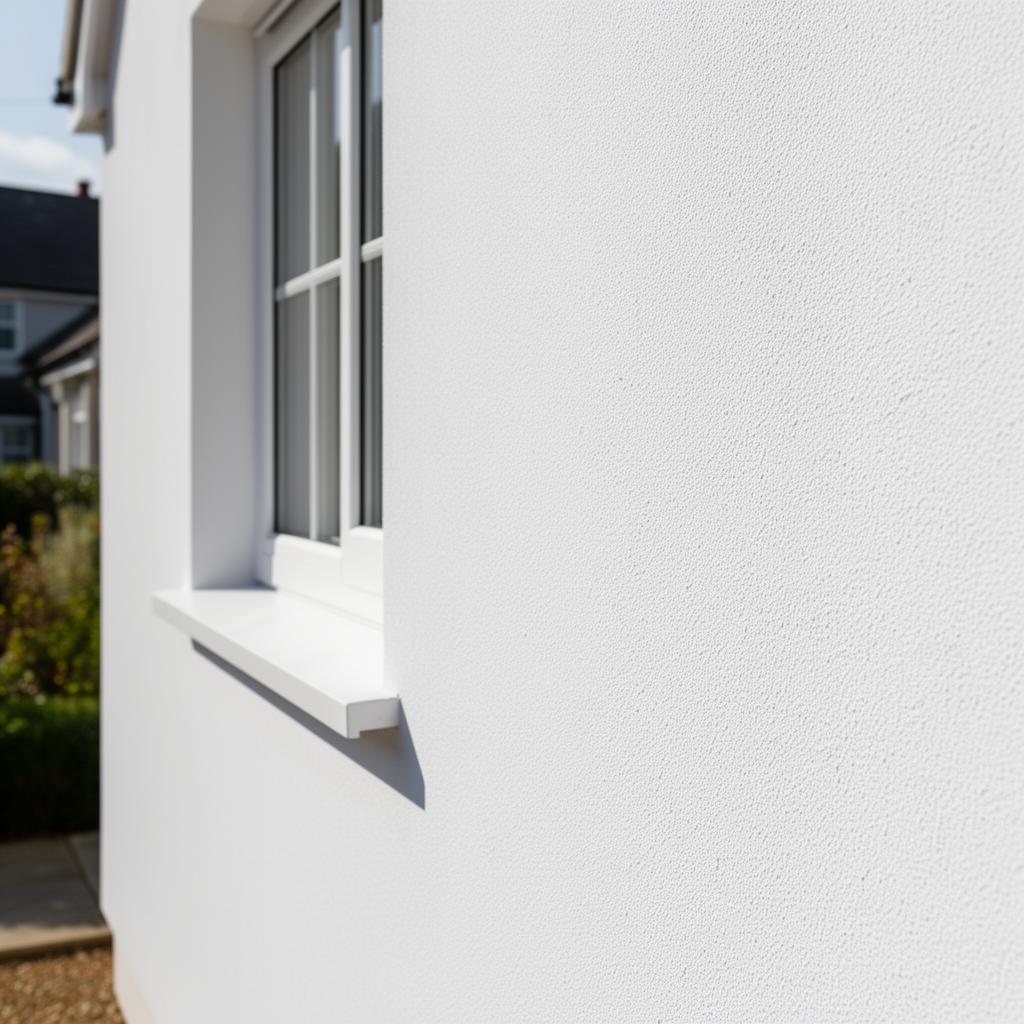
Everything below applies to pebbledash and render elevations in Goosewell, inside the PL9 area we cover in full. The method is set by the surface and the exposure, and nothing else changes it.
The Devon detail
- Plymstock sits about 0.2 miles from Goosewell on our round, so visits are often shared.
- Postcode district: PL9. County: Devon. Approx 3.3 miles from the PL3 base.
- Access is usually via A379 and Laira Bridge.
- Recorded character: estate. 1970s estate east of the Laira Bridge.
- Nearest full coverage hub: Plymstock (PL9), Plymouth City Council.
pebbledash and render and what it needs
- Cracks in render change the staining pattern, because water then sits behind the face as well as on it.
- Coloured through-render fades gradually, so what looks like dirt on an older wall is sometimes age in the finish.
- Rinsing pebbledash runs top down at low pressure so nothing is driven behind the stones.
- Repairs to pebbledash rarely match, so cleaning makes old patches more visible rather than less.
Application, dwell and rinse
- 1.Where growth has spread onto a UPVC panel or door surround, it is wiped rather than sprayed.
- 2.On render below a flat roof edge, the drip detail is checked, because a failed one puts the stain straight back.
- 3.Where a wall abuts a neighbour's boundary within a metre, the fan is narrowed and the pass slowed.
- 4.Fence panels tight against a wall are wetted first so run-off does not sit on dry timber.
- 5.Where a wall meets a conservatory or lean-to, the roof glazing is sheeted before anything is applied above it.
- 6.Vents, extractor terminals and trickle vents get taped, because water pushed into them is the one thing that turns an exterior job into an interior one.
- 7.On thin-coat systems the lance is kept moving, because holding it still in one place is how a shadow mark gets left behind.
- 8.Any garden furniture within the spray arc moves before the mix is made up, not while the lance is running.
- 9.Paving, steps and paths below the elevation are rinsed clear at the end of the visit.
- 10.Render beads and stop ends are inspected as work reaches them, because a lifted bead traps water behind the finish.
The survey we do in Goosewell
- 01Anything that cannot be explained by water is treated with more caution, not less.
- 02The angle of morning sun on the elevation tells you how long it stays damp.
- 03Whether the growth has spread onto glass and frames tells you how long it has been established.
- 04The mortar is tested with a key at a discreet point, since soft mortar sets the whole method.
- 05How quickly a splash of water darkens the surface says how porous the finish has become.
- 06A slow walk of the gutter line from the ground finds most of the causes worth fixing.
- 07The condition of the cills tells you how much water has been running down the face.
- 08A test patch at low strength shows what the surface will do before the full elevation commits to it.
What to book before and after the walls
Gutters are cleared between the roof and the walls, so the first heavy rain does not restain a finished elevation.
Where scaffolding is going up for other work, the wall clean is easier and safer while it is standing.
Solar panels are cleaned separately from the roof slope they sit on, and after it.
Where a soakaway is already struggling, wall work is planned for a drier stretch.
What to tell us in advance
- Point out ground-floor windows that are painted shut, as they need different masking.
- Note any external socket or garden power run near the base of the wall.
- Tell us if a gutter has been overflowing, because that changes what we look at first.
- Point out any alarm sensor mounted externally on the elevation.
- Note where hoses can be run without crossing a doorway.
- Let us know if anyone in the house works nights and needs quiet at a particular time.
- Point out where the render was patched, since patches clean differently from the original.
- If parking needs a permit or a bay suspension, tell us early.
Asked most often in PL9
- Do you clean boundary walls too?
- If they take the same method as the house, yes, in the same visit.
- Can you clean render on an insulated system?
- Yes, with extra care around bead edges where water should not be driven in.
- Do you need my electricity?
- No. Kit runs off the van.
- Will the drive get messy?
- Anything below the elevation is rinsed off before we finish.
- Can you work while builders are on site?
- Better after they finish, so their dust and debris does not land on clean work.
- How much water does a wall job use?
- Less than a pressure wash, because the work is dwell time rather than volume.
- How long before I can repaint?
- Several dry days after the wall has been treated and rinsed.
- Can you treat a wall that has already been jet washed?
- Yes. The damaged band is worked at a reduced strength because it is more open than the rest.
Close to Goosewell
Goosewell wall softwash, in short
Ask what will be used and how long it will be left on. The answers tell you everything. Written scope first means nothing is discovered late. Doing the roof, gutters and walls in the right order is most of the value.
Before the photos go up
Clean elevations change the first picture of a listing more than anything else outside.
Quote for a Goosewell property
Monday to Saturday, 8am – 7pm