
Cleaning tired walls in Lamerton
painted render and stone walls, slate roofs, 14.4 miles from the yard.
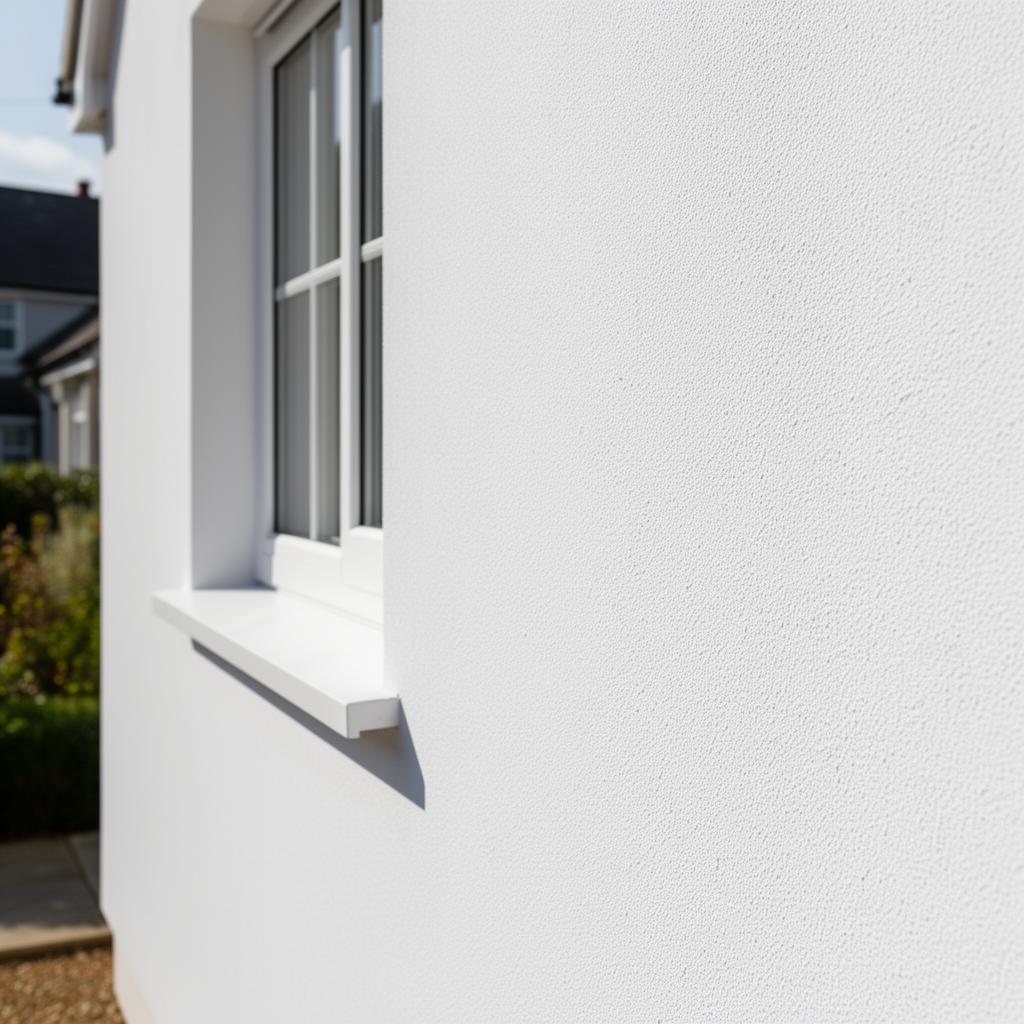
Cleaning walls in Lamerton is a slow, quiet job done at low pressure. It is nothing like a driveway wash, and on painted render and stone that difference is the whole point.
The Devon detail
- Typical roof covering here is slate, which affects what washes down onto the walls.
- Nearest full coverage hub: Tavistock (PL19), West Devon Borough Council.
- Typical wall finish here is painted render and stone, which sets the cleaning method.
- PL19 covers 5 town hubs and 12 villages or districts in our radius.
- Tavistock sits about 0.9 miles from Lamerton on our round, so visits are often shared.
painted render and stone and what it needs
- Render cleans up well at low pressure and badly at high pressure, because pressure removes the finish along with the growth.
- Thin-coat systems are thinner than people assume, and a jet held still in one place leaves a permanent shadow.
- Painted masonry can be cleaned, though a paint film that has already lost adhesion will lift where it was going to fail anyway.
- Gloss-painted details like cills are wiped rather than sprayed.
- Slate-faced walls shed water quickly but the bedding mortar does not.
- The rinse on stone is gentle enough that nothing is driven into an open joint.
Application, dwell and rinse
- 1.The lance is held at a distance and an angle that lets the fan open fully instead of hitting the wall as a jet.
- 2.A final walk of each finished elevation happens with the property owner where they are home, and by photograph where they are not.
- 3.Any garden furniture within the spray arc moves before the mix is made up, not while the lance is running.
- 4.Where a wall runs straight down to a lawn, a run of sheeting is pegged along the base instead of relying on dilution alone.
- 5.Where a property is rendered onto insulation, extra care goes into avoiding water at the bead edges.
- 6.Waste water is directed to a soakaway or drain that can take it rather than allowed to pond on a lawn.
- 7.Where a pond or water feature sits below an elevation, it is covered and the run-off diverted well away from it.
- 8.Where growth has spread onto a UPVC panel or door surround, it is wiped rather than sprayed.
- 9.Where the growth sits mostly in the lower metre, that band is treated twice and the rest once.
- 10.Timber decking or a doorstep directly under the work is covered rather than rinsed afterwards.
The survey we do in Lamerton
- 01Photographs taken before work provide the reference for judging the result later.
- 02Where the wall carries a previous coating over render, its edges are inspected for lifting.
- 03Efflorescence is distinguished from lichen before anything is applied, since one is salt and one is alive.
- 04Any staining that continues below ground level is a drainage question, not a cleaning one.
- 05Where the pattern is a band at the bottom, splash from the ground is doing it.
- 06Anything that cannot be explained by water is treated with more caution, not less.
- 07A wall that is warmer than its neighbours on a cold morning is likely holding moisture.
- 08A slow walk of the gutter line from the ground finds most of the causes worth fixing.
What to book before and after the walls
Small repairs to pointing are best done after cleaning, when what needs doing is visible.
Where scaffolding is going up for other work, the wall clean is easier and safer while it is standing.
Fascia and soffit cleaning is folded into the wall visit rather than being priced as a separate trip.
Rendering or repair work should always finish before cleaning starts, never the other way round.
What to tell us in advance
- Say if the property has a flat roof section that we would be working above.
- If parking needs a permit or a bay suspension, tell us early.
- Warn us about a soft lawn or an unmade drive so boards come on the van.
- If you have a pond, a water butt or a wildlife area, point it out in advance.
- Tell us if there is a low wall or a step at the base of the elevation that gets slippery.
- Say whether the side passage is wide enough for a wheeled kit trolley.
- Let us know if anyone in the house works nights and needs quiet at a particular time.
- Say if a conservatory or lean-to abuts the elevation, so glazing can be sheeted.
Straight answers before you book
- Does the treatment stain paving?
- No, and paving below the elevation is rinsed at the end anyway.
- How long does a visit take?
- A typical two-elevation job is a few hours. A full wrap-around on a larger property is a day.
- Do you work weekends?
- We work Monday to Saturday, 8am to 7pm.
- Can you work in cool damp weather?
- Yes. Wall softwash is fine in cool damp conditions. Heavy rain during application is the only real blocker.
- Do you clean chimney stacks?
- Where they can be reached safely from a position that keeps us off the roof covering.
- How is a quote put together?
- By elevation area, surface type and access, written down before anything starts.
- Will you tell me if the job is not worth doing?
- Yes. If the staining is in the substrate rather than on it, cleaning will not change much and we will say so.
- Do you leave a written record of what was done?
- Photographs of before and after the visit, plus anything found in poor condition.
Other Devon places on the same round
The essentials
One elevation, two elevations or the whole property. The method does not change, only the time it takes. Low pressure is not a compromise. On render it is the only sensible option. Nothing on this page needs a site visit to price if you can send a couple of clear photographs. Monday to Saturday, 8am to 7pm.
Before the photos go up
Clean elevations change the first picture of a listing more than anything else outside.
Quote for a Lamerton property
Monday to Saturday, 8am – 7pm