
Wall and render softwash near Batson
painted render and stone walls, slate roofs, 17.6 miles from the yard.
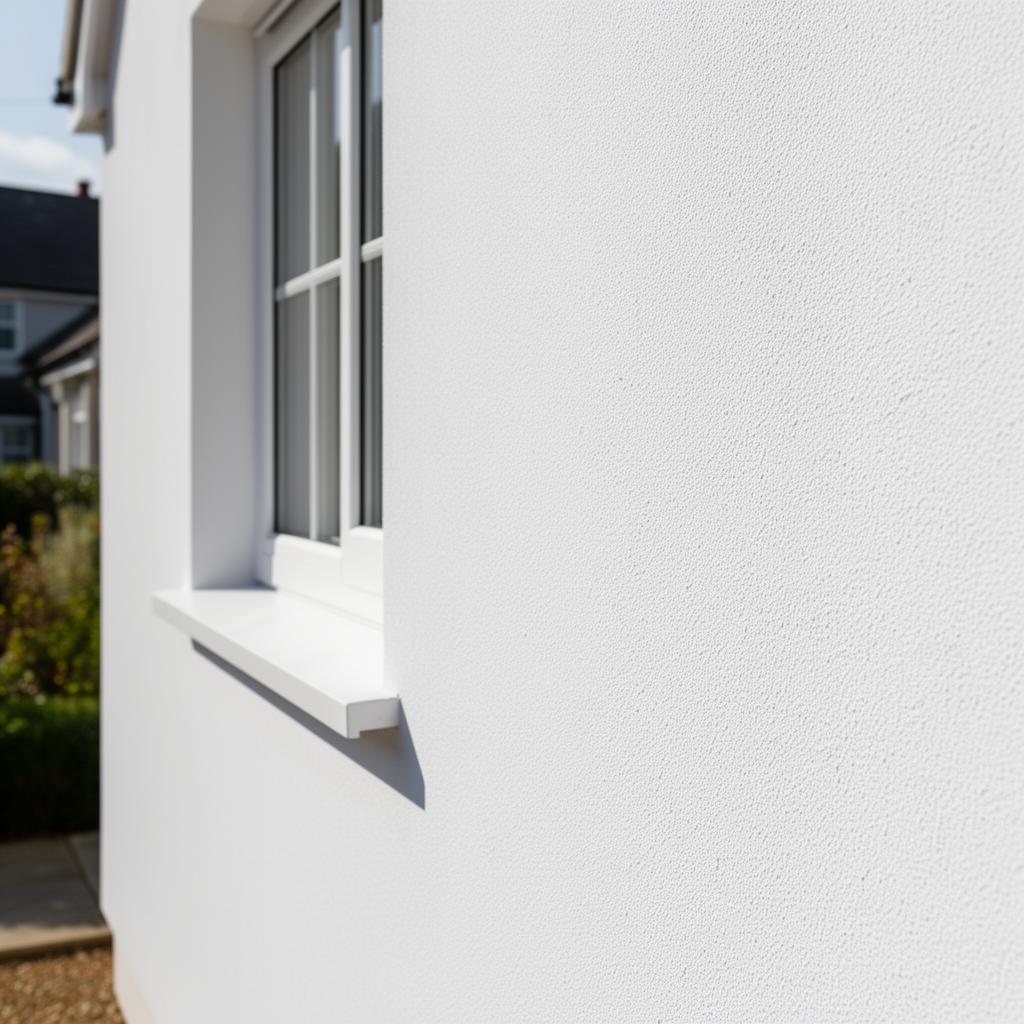
Most enquiries from Batson start with one elevation that has gone darker than the rest. Nine times out of ten the reason is how long that face stays damp, not how dirty it is.
Quote for a Batson property
Monday to Saturday, 8am – 7pm
Why walls green up in Batson
- A patio laid up against a wall reflects splash onto it every time it rains hard.
- Airflow through a passage between two houses is fast but the passage itself is in permanent shade.
- The lowest metre of any wall takes splash-back off the path and stains from the ground up, not the top down.
- Prevailing wind decides which elevation takes driven rain, and that elevation is nearly always the tired-looking one.
- Growth thickest at head height usually means splash from a hard surface rather than run-off from above.
- Salt spray does not itself grow, but it roughens and holds damp, which is the same outcome.
- Soil banked above the damp course keeps the base of a wall permanently wet.
- Where two elevations meet in a tight internal corner, neither one dries properly.
- Wall growth often maps exactly to where a previous extension roof used to sit.
What the staining pattern tells us
- 01Whether the property is exposed or sheltered is judged on the day, not from a map.
- 02Colour matters: green suggests algae, black suggests fungal spotting, grey-white crust suggests lichen.
- 03A wall that is warmer than its neighbours on a cold morning is likely holding moisture.
- 04Efflorescence is distinguished from lichen before anything is applied, since one is salt and one is alive.
- 05How quickly a splash of water darkens the surface says how porous the finish has become.
- 06Where the pattern is a band at the bottom, splash from the ground is doing it.
- 07A slow walk of the gutter line from the ground finds most of the causes worth fixing.
- 08Any staining that continues below ground level is a drainage question, not a cleaning one.
Getting a Batson property ready
- Point out where the render was patched, since patches clean differently from the original.
- Say where the outside tap is, and whether it runs at any pressure.
- If there are children's toys or a trampoline against the wall, they need to move.
- If you have a pond, a water butt or a wildlife area, point it out in advance.
- Point out any window that does not seal properly, so it gets sheeted rather than sprayed near.
- Say whether the elevation backs onto a public footpath.
- Mention shared access or a right of way that we will be crossing.
- Mention any planned decorating so the drying window can be built into the date.
What the surface will and will not take
- Render that has lost its water repellency absorbs surface water instead of shedding it, which extends every damp spell.
- A rendered wall under a failed drip detail restains within a season however well it was cleaned.
- A test patch low down and out of sight is how failing paint is found deliberately.
- Colour on a painted wall usually returns once the film on top is removed.
- Stone elevations vary enormously in hardness, and the pointing is usually the weakest part.
- Method is set by the softest thing on the wall, not the hardest.
The method we would use in Batson
- 1.A wall in deep shade is worked earlier in the day, when there is most light on it to judge coverage.
- 2.Photographs are taken of anything found in poor condition, so it can be shown rather than described.
- 3.Rinsing, where it is needed at all, runs top down at a pressure you could hold your hand in front of.
- 4.A wall carrying a house number, plaque or bell push has those items worked around by hand.
- 5.Where a property is rendered onto insulation, extra care goes into avoiding water at the bead edges.
- 6.Curtains and blinds behind a treated elevation are best left closed, and we say so before starting rather than afterwards.
- 7.The elevation is walked first and anything loose, open or already failing is noted before a drop of water goes near it.
- 8.Growth in a shaded return is treated on the same visit even when only the front was asked about, if access allows.
- 9.Where growth has spread onto a UPVC panel or door surround, it is wiped rather than sprayed.
- 10.External drains below the work are covered with a grate mat and cleared before we leave.
Straight answers before you book
- Can you work in cool damp weather?
- Yes. Wall softwash is fine in cool damp conditions. Heavy rain during application is the only real blocker.
- How much water does a wall job use?
- Less than a pressure wash, because the work is dwell time rather than volume.
- Should the gutters be done at the same time?
- Usually. Overflow is behind a large share of wall staining, so clearing it protects the work.
- Will the treatment harm my planting?
- Beds are wetted down first so run-off arrives diluted, and rinsing is directed away from anything growing.
- Does the treatment stain paving?
- No, and paving below the elevation is rinsed at the end anyway.
- What if part of the wall does not come up?
- It is left to weather rather than pushed harder, and we will say what we think is happening.
- Will it strip my paint?
- Sound paint is unaffected. Paint that has already lost adhesion may lift, which is why a test patch goes on first.
- How long before I can repaint?
- Several dry days after the wall has been treated and rinsed.
Sequencing the outside of the house
Booking services out of order is the commonest reason a clean seems not to have lasted.
Gutters are cleared between the roof and the walls, so the first heavy rain does not restain a finished elevation.
Where scaffolding is going up for other work, the wall clean is easier and safer while it is standing.
Conservatory roofs go before the wall above them, then get a final rinse afterwards.
Other Devon places on the same round
TQ8 context
- Typical roof covering here is slate, which affects what washes down onto the walls.
- Nearest full coverage hub: Salcombe (TQ8), South Hams District Council.
- Recorded character: estuary hamlet. Creek-side hamlet at the top of Salcombe Harbour.
- Typical wall finish here is painted render and stone, which sets the cleaning method.
- Postcode district: TQ8. County: Devon. Approx 17.6 miles from the PL3 base.
The essentials
The mortar is the weakest link on most walls, so the mortar sets the pressure. Every coated wall has a maximum pressure it tolerates, and it is much lower than most people assume. Nothing on this page needs a site visit to price if you can send a couple of clear photographs.
Selling the house?
Clean elevations change the first photograph, and the first photograph is what gets viewings.