
Softwashing painted stone and render walls around Rame
painted stone and render walls, slate roofs, 7.9 miles from the yard.
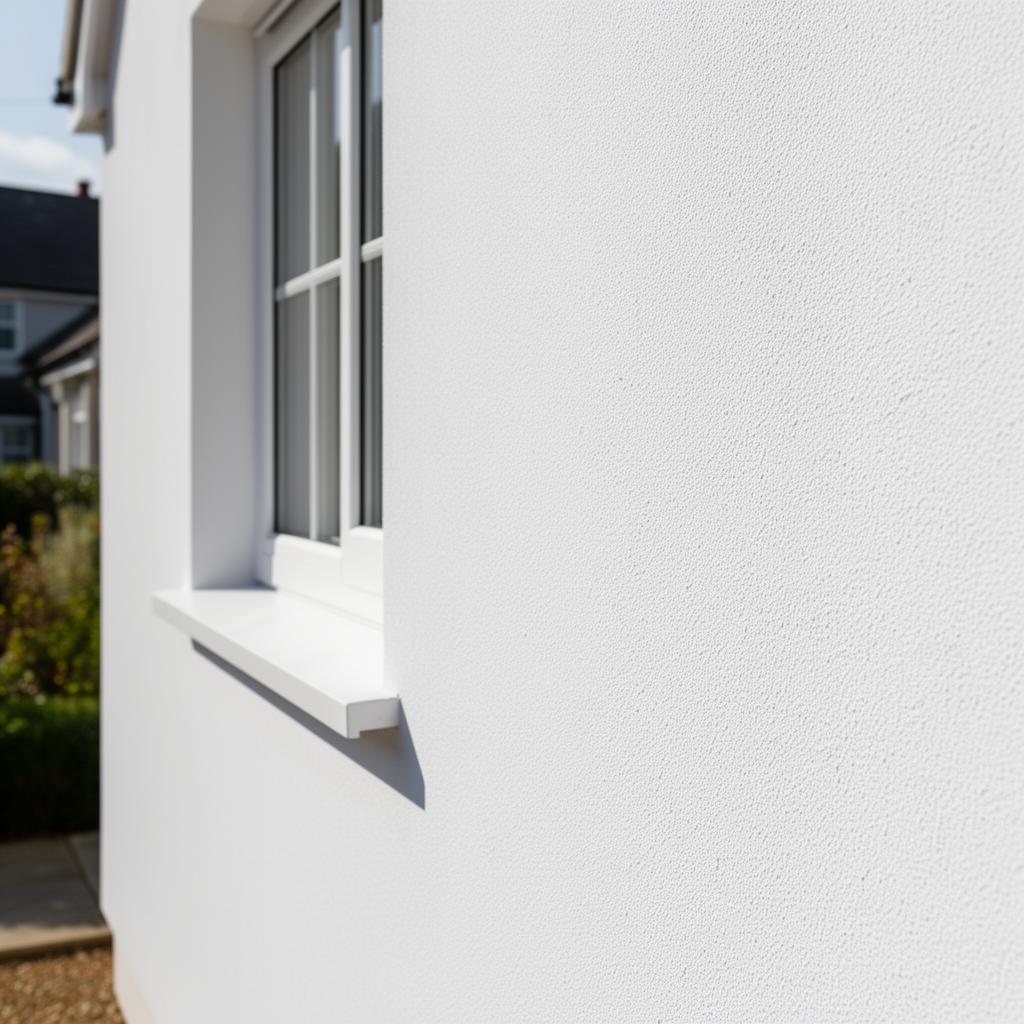
Most enquiries from Rame start with one elevation that has gone darker than the rest. Nine times out of ten the reason is how long that face stays damp, not how dirty it is.
The Cornwall detail
- Nearest full coverage hub: Cawsand (PL10), Cornwall Council.
- Typical wall finish here is painted stone and render, which sets the cleaning method.
- Recorded character: coastal hamlet. Rame Head church and coastguard station.
- Access is usually via local lanes off B3247.
- Postcode district: PL10. County: Cornwall. Approx 7.9 miles from the PL3 base.
painted stone and render and what it needs
- Coloured through-render fades gradually, so what looks like dirt on an older wall is sometimes age in the finish.
- A rendered wall under a failed drip detail restains within a season however well it was cleaned.
- A test patch low down and out of sight is how failing paint is found deliberately.
- A weaker mix and a longer wait suits paint better than anything stronger and faster.
- Stone elevations vary enormously in hardness, and the pointing is usually the weakest part.
- Lime mortar in a stone wall is softer than the stone by design, and that design is worth respecting.
Application, dwell and rinse
- 1.Rainwater goods are checked while the elevation is being worked, since a blocked hopper explains most single-strip staining.
- 2.A final walk of each finished elevation happens with the property owner where they are home, and by photograph where they are not.
- 3.The job is worked one elevation at a time from end to end so that nothing dries out mid-wall.
- 4.Where a wall meets a conservatory or lean-to, the roof glazing is sheeted before anything is applied above it.
- 5.Where a pond or water feature sits below an elevation, it is covered and the run-off diverted well away from it.
- 6.Where a wall runs straight down to a lawn, a run of sheeting is pegged along the base instead of relying on dilution alone.
- 7.Ridge and verge debris that has landed on the wall head is brushed off dry before anything wet goes on.
- 8.Timber decking or a doorstep directly under the work is covered rather than rinsed afterwards.
- 9.Sheltered corners and inside angles hold growth longest and get worked before the open faces.
- 10.Guttering above a worked elevation is checked for standing water, because a drip mid-treatment ruins an even finish.
The survey we do in Rame
- 01The ground level relative to the damp course is checked before the base of a wall is treated.
- 02Whether the growth has spread onto glass and frames tells you how long it has been established.
- 03Hollow-sounding render is checked by tapping before any water is put onto it.
- 04Where the pattern is even across the whole face, exposure and aspect are the cause.
- 05The mortar is tested with a key at a discreet point, since soft mortar sets the whole method.
- 06Whether the property is exposed or sheltered is judged on the day, not from a map.
- 07A wall that is warmer than its neighbours on a cold morning is likely holding moisture.
- 08The elevation is read from the pavement first and from a metre away second.
Order of work, top down
Gutters are cleared between the roof and the walls, so the first heavy rain does not restain a finished elevation.
Where scaffolding is going up for other work, the wall clean is easier and safer while it is standing.
Where a soakaway is already struggling, wall work is planned for a drier stretch.
If a decorator is due, the wall clean goes in first and is given time to dry fully.
What to tell us in advance
- If a security light or camera covers the elevation, tell us so it can be isolated.
- Tell us if a gutter has been overflowing, because that changes what we look at first.
- Point out any window that does not seal properly, so it gets sheeted rather than sprayed near.
- Trim back anything that has grown tight against the wall, or ask us to work around it.
- Say whether the property is occupied during the day, since that changes nothing technically but helps the plan.
- Point out where the render was patched, since patches clean differently from the original.
- Warn us about a soft lawn or an unmade drive so boards come on the van.
- Let us know if a neighbour parks under the wall on certain days.
Asked most often in PL10
- Do you treat mortar joints separately?
- The method is set by the mortar because it is nearly always the softest thing on the wall.
- What if there is a wasp nest under the eaves?
- We stop and leave that section. It gets picked up after the nest has been dealt with.
- Is timber cladding treated the same way?
- No. Cladding takes a weaker mix, and pressure is avoided entirely because it raises the grain.
- Can you clean a wall covered in ivy?
- The ivy needs removing first. Once it is off, the shaded face behind it is treated as normal.
- What about air bricks and vents?
- Covered for the duration, uncovered before we leave.
- Is there a smell?
- There is a mild one during application that clears within a few hours.
- Can you clean a wall before painting?
- Yes, and it should be done first. Paint over live growth fails from underneath.
- What if the render is cracked?
- We will point it out and work around it. Cleaning does not fix cracks and can make them more obvious.
Close to Rame
Rame wall softwash, in short
Softwash trades speed for safety on the finish, and that trade is worth making on any coated wall. Read the staining pattern first and the answer usually names itself. The point is not a clean wall for a fortnight. It is a wall that stays clean because the roots went with the surface growth.
Send two photos, near and far
One from the pavement and one from a metre away is usually enough to work from.
Quote for a Rame property
Monday to Saturday, 8am – 7pm