
Green walls in Weir Quay? Start here
painted stone and render walls, slate roofs, 8.9 miles from the yard.
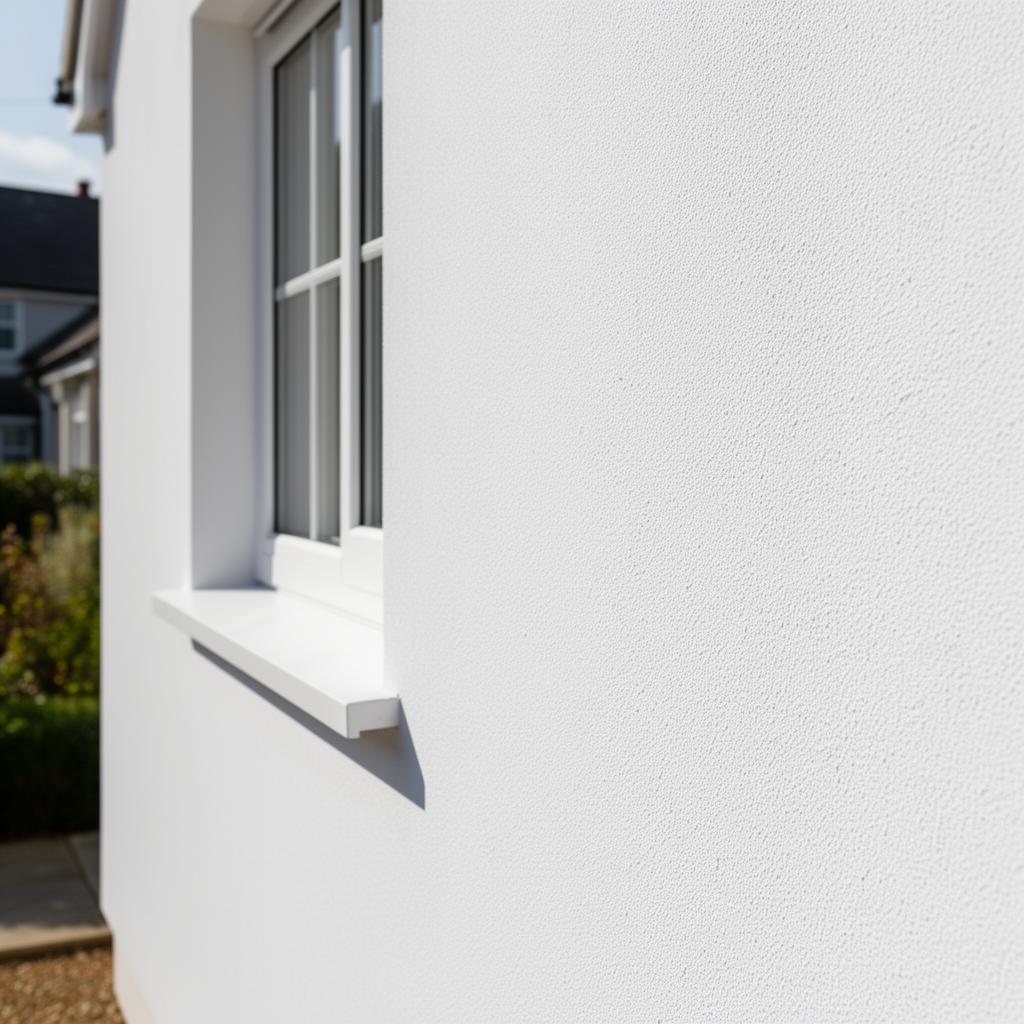
Weir Quay is a estuary hamlet within the PL20 area, roughly 8.9 miles out from PL3 and one of 24 places we cover in that district. Its painted stone and render walls behave in a predictable way once you know the exposure.
Quote for a Weir Quay property
Monday to Saturday, 8am – 7pm
Why walls green up in Weir Quay
- Spores travel on the wind and land everywhere. What decides whether they take hold is whether the surface stays damp.
- Salt spray does not itself grow, but it roughens and holds damp, which is the same outcome.
- Salt-laden air roughens exposed surfaces slightly, and rougher surfaces hold more moisture.
- Roof debris shed from a mossy slope lands on the same band of wall year after year.
- A wall that never takes direct sun stays damp for hours after everything else has dried, and that extra time is the whole story.
- A wall shaded by its own porch roof for half the day dries at half the rate of the face beside it.
- Pebbledash holds water in the shadow of every stone, so it stays damp long after a flat render has dried.
- The first sign is usually a faint grey cast rather than green, and grey is easier to ignore.
- A path that slopes towards a house rather than away from it keeps the base of the wall wet after every shower.
What the staining pattern tells us
- 01Any staining that continues below ground level is a drainage question, not a cleaning one.
- 02The elevation is read from the pavement first and from a metre away second.
- 03The state of the pointing is judged at the most exposed corner, not the most convenient one.
- 04Efflorescence is distinguished from lichen before anything is applied, since one is salt and one is alive.
- 05Cracks are traced to their ends, because a crack that runs to an opening behaves differently from one that stops.
- 06The age of the finish is estimated before a strength of mix is chosen.
- 07Weep holes are counted and checked for blockage while the wall is being read.
- 08The underside of the soffit is checked, because staining there rarely stays there.
Getting a Weir Quay property ready
- Mention any cladding or timber detail that you would rather was left alone.
- Flag any recent repair or repaint, because fresh work is treated more gently.
- Mention any planned decorating so the drying window can be built into the date.
- Tell us about any previous treatment that came back quickly, and how quickly.
- Let us know if anyone in the house works nights and needs quiet at a particular time.
- If you have a pond, a water butt or a wildlife area, point it out in advance.
- Let us know if the property is listed or in a conservation area, as it affects method choice.
- Say where the outside tap is, and whether it runs at any pressure.
What the surface will and will not take
- Cracks in render change the staining pattern, because water then sits behind the face as well as on it.
- Coloured through-render fades gradually, so what looks like dirt on an older wall is sometimes age in the finish.
- Chalking paint is a rougher surface than new paint, which is why older painted walls green faster.
- Where a painted wall has been patch-repainted, the patches clean at a different rate.
- Loose stones and open joints are recorded and left alone rather than washed.
- Treatment on stone is applied in stages so it soaks into the joints rather than running off the faces.
The method we would use in Weir Quay
- 1.The colour keeps improving for a fortnight after the visit as dead growth loses its grip and weathers away.
- 2.The lance is held at a distance and an angle that lets the fan open fully instead of hitting the wall as a jet.
- 3.A wall backing onto a public pavement is worked at times that keep the spray arc away from passers-by.
- 4.Where a wall carries a satellite dish or cable run, the fixings are checked before they get wet.
- 5.Where growth has spread onto a UPVC panel or door surround, it is wiped rather than sprayed.
- 6.Gutter faces and fascia boards are wiped as part of the same pass, since they sit in the same spray path.
- 7.The finished elevation is looked at from the pavement, not from the ladder, because that is where it will be seen from.
- 8.Where two different finishes meet on one elevation, they are treated as two jobs on one wall.
- 9.Sheltered corners and inside angles hold growth longest and get worked before the open faces.
- 10.The mix is made up in small batches as the work moves, rather than one large batch that stands and weakens.
Straight answers before you book
- Can you treat a wall that has already been jet washed?
- Yes. The damaged band is worked at a reduced strength because it is more open than the rest.
- Is timber cladding treated the same way?
- No. Cladding takes a weaker mix, and pressure is avoided entirely because it raises the grain.
- Do you need scaffolding?
- Rarely. Most elevations are reached from the ground with a telescopic lance.
- Can you quote from photographs?
- For most straightforward jobs, yes. Awkward access is worth a look in person.
- Do you have a minimum size of job?
- A single gable or a porch is still worth doing properly.
- What is the difference between this and a wash down?
- A wash down removes what you can see. A treatment removes what is growing, which is not the same thing.
- Will it damage the pointing?
- No. That is exactly what pressure does and softwash avoids.
- Can you work around a conservatory?
- The glazing is sheeted first and given a rinse at the end.
Planning a full exterior in Weir Quay
If a decorator is due, the wall clean goes in first and is given time to dry fully.
Glass is done last on any multi-service visit, since it picks up whatever the earlier stages put in the air.
The number of elevations completed in one visit depends on their area, access, condition and weather.
A first clean is heavier work than the ones that follow, so the interval afterwards can be longer than people expect.
Other Devon places on the same round
PL20 context
- Recorded character: estuary hamlet. Boat-yard hamlet on the Tamar.
- PL20 covers 12 town hubs and 12 villages or districts in our radius.
- Postcode district: PL20. County: Devon. Approx 8.9 miles from the PL3 base.
- Typical wall finish here is painted stone and render, which sets the cleaning method.
- Nearest full coverage hub: Bere Alston (PL20), West Devon Borough Council.
The essentials
The mortar is the weakest link on most walls, so the mortar sets the pressure. The difference between rinsing and treating is invisible on the day and obvious six months later. Cleaning reveals condition. Sometimes that means finding a repair, and it is better found than hidden under moss.
Tell us what you have tried
If a previous clean did not last, that tells us something useful before we quote.